How plant-specific process control can stabilize submerged-arc furnaces, improve metal recovery, reduce specific energy and make FeCr, FeMn, SiMn and FeSi operations more predictable.

Ferroalloy plants live at the intersection of extreme temperature, high electrical load, variable raw materials and unforgiving production economics. A submerged-arc or high-temperature smelter furnace is not just a vessel with electrodes. It is a coupled electrical, thermal, chemical and materials-handling system where a small change in ore quality, coke reactivity, charge sizing, slag chemistry or electrode behaviour can quietly move the plant away from its optimum.
For producers of ferrochrome, ferromanganese, silicomanganese, ferrosilicon and related bulk ferroalloys, the usual operational questions are practical and urgent:
This is where ExtractMet Private Limited positions its process-control and digital-twin offering: plant-specific metallurgical intelligence built from first-principles engineering, plant-data analysis, modelling, simulation, AI/ML and shop-floor implementation logic.
Modern ferroalloy plants already generate many signals: transformer load, electrode currents, electrode movement, feeder rates, raw-material chemistry, tap analysis, slag analysis, gas-cleaning parameters, temperatures, alarms and production reports. Yet the most important variables are often not measured directly.
The furnace team needs to know the effective reduction state, active coke balance, slag-metal partitioning tendency, burden descent quality, hidden hot-zone behaviour, electrode penetration condition, refractory risk, expected alloy composition and the next best operating action. These are not simple tags in a DCS. They are inferred states.
A dashboard can show what happened. A digital twin should help explain why it happened and what to do next.

Suggested caption: A ferroalloy digital twin should connect plant data with metallurgical logic, not simply display more trends.
Ferroalloy smelting is difficult because the furnace is a multi-physics reactor. The operator controls only a limited set of actions, but the furnace response depends on several interacting phenomena:
1. Burden and raw-material variability. Chromite, manganese ore, quartz, reductant, flux and recycle materials change in chemistry, size, moisture, decrepitation behaviour and reactivity. These differences affect permeability, gas flow, reduction rate, slag volume, metal recovery and power distribution.
2. Electrical-thermal coupling. Electrode position, current, voltage, resistance, reactance and power factor determine where energy is released. Electrical stability does not automatically mean metallurgical stability.
3. Slag chemistry and viscosity. FeCr, FeMn, SiMn and FeSi furnaces require different slag practices. Basicity, MgO/Al2O3 ratio, silica activity, MnO or Cr2O3 loss, and slag temperature can decide whether the furnace runs smoothly or loses valuable metal into slag and fumes.
4. Carbon and reduction balance. Too little reductant can leave reducible oxides in slag. Too much reductant can increase carbon pickup, affect bed resistance and disturb furnace gas evolution. The correct balance is alloy-specific and plant-specific.
5. Tapping, casting and campaign condition. The quality of each tap reflects not only the last few minutes, but the cumulative thermal, electrical and chemical history of the furnace.
That complexity is precisely why generic recommendations rarely deliver lasting results. The control system has to be connected to the real plant, the real feed materials, the real transformer and the real operating constraints.
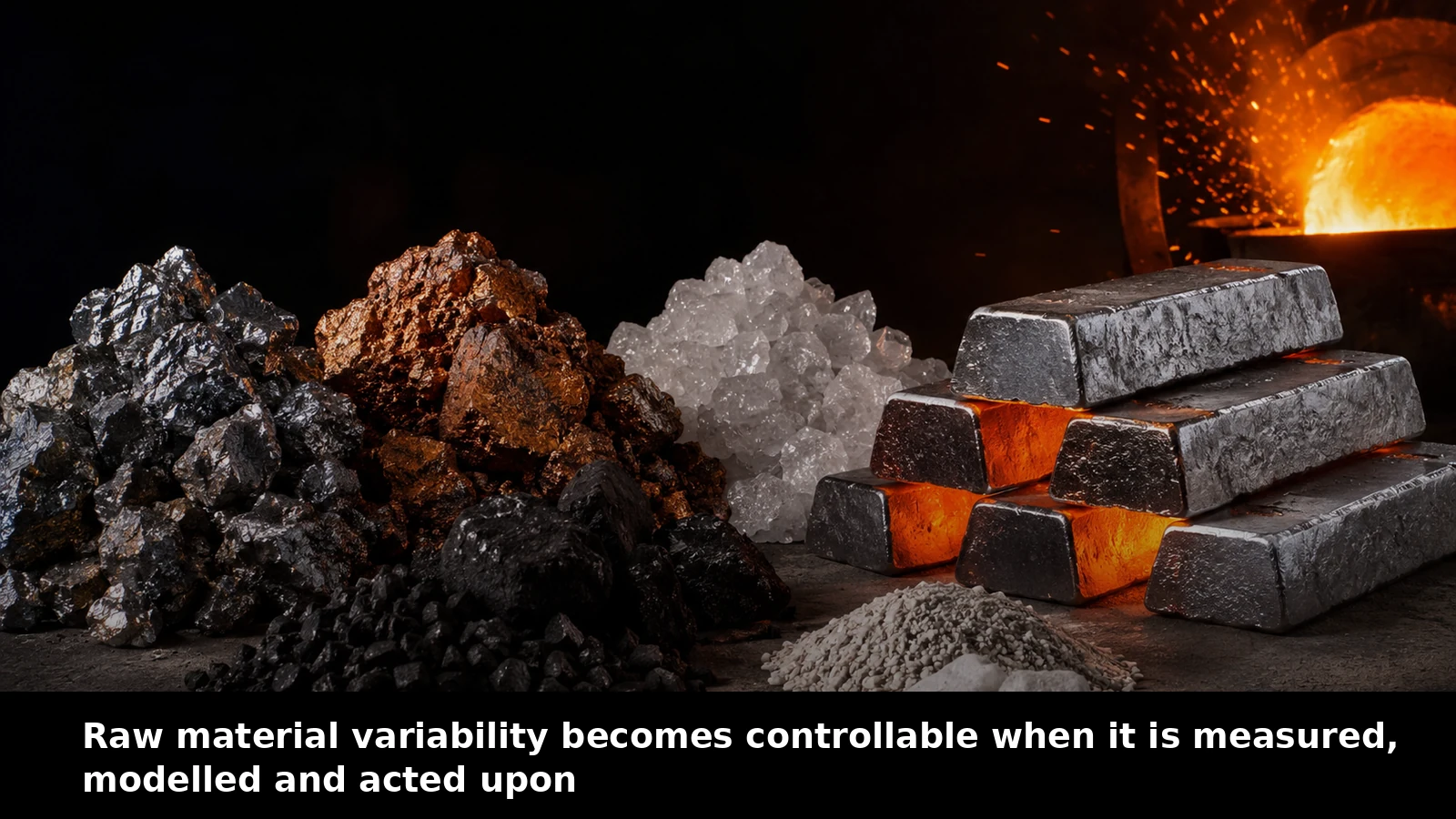
Suggested caption: In ferroalloy production, raw-material variability is not a nuisance. It is one of the main control variables.
ExtractMet offers metallurgical engineering support for process optimization, advanced process control and digital twins across metal-production operations. For ferroalloy plants, this can be translated into a practical, staged solution rather than a one-time report.
The first step is to identify where the largest repeated losses occur: energy, recovery, electrode consumption, downtime, rework, slag loss, refractory life or quality variation. ExtractMet can map plant tags, production reports, laboratory data, tap records and raw-material analysis into an auditable baseline.
A credible control solution begins with furnace-specific balances: ore input, reductant input, flux input, metal output, slag output, dust/fume losses and off-gas behaviour. The model should estimate where Cr, Mn, Si, Fe, C, O and gangue components are going, not just correlate trends.
For FeCr plants, the focus may be chromium recovery, Cr/Fe ratio, slag MgO-Al2O3-SiO2 balance and residual Cr2O3 in slag. For FeMn and SiMn, it may be Mn recovery, Si reduction, slag basicity, carbon and phosphorus constraints. For FeSi, it may be quartz quality, SiO gas loss, reductant reactivity, electrode penetration and silicon recovery.
Electrode regulation is central to smelter performance. The analytics layer can connect current, voltage, slipping, holder movement, power factor, resistance, transformer tap, demand control and alarms with metallurgical outcomes.
The final value appears when the model becomes usable on the shop floor: recommended charge correction, reductant adjustment, flux strategy, power-feed balance, expected tap chemistry, slag-risk warning, energy KPI warning and what-if simulations before a plant trial.
Explore the wider ExtractMet digital-twin portfolio, model catalogue and online model demo hub for related process-intelligence directions.
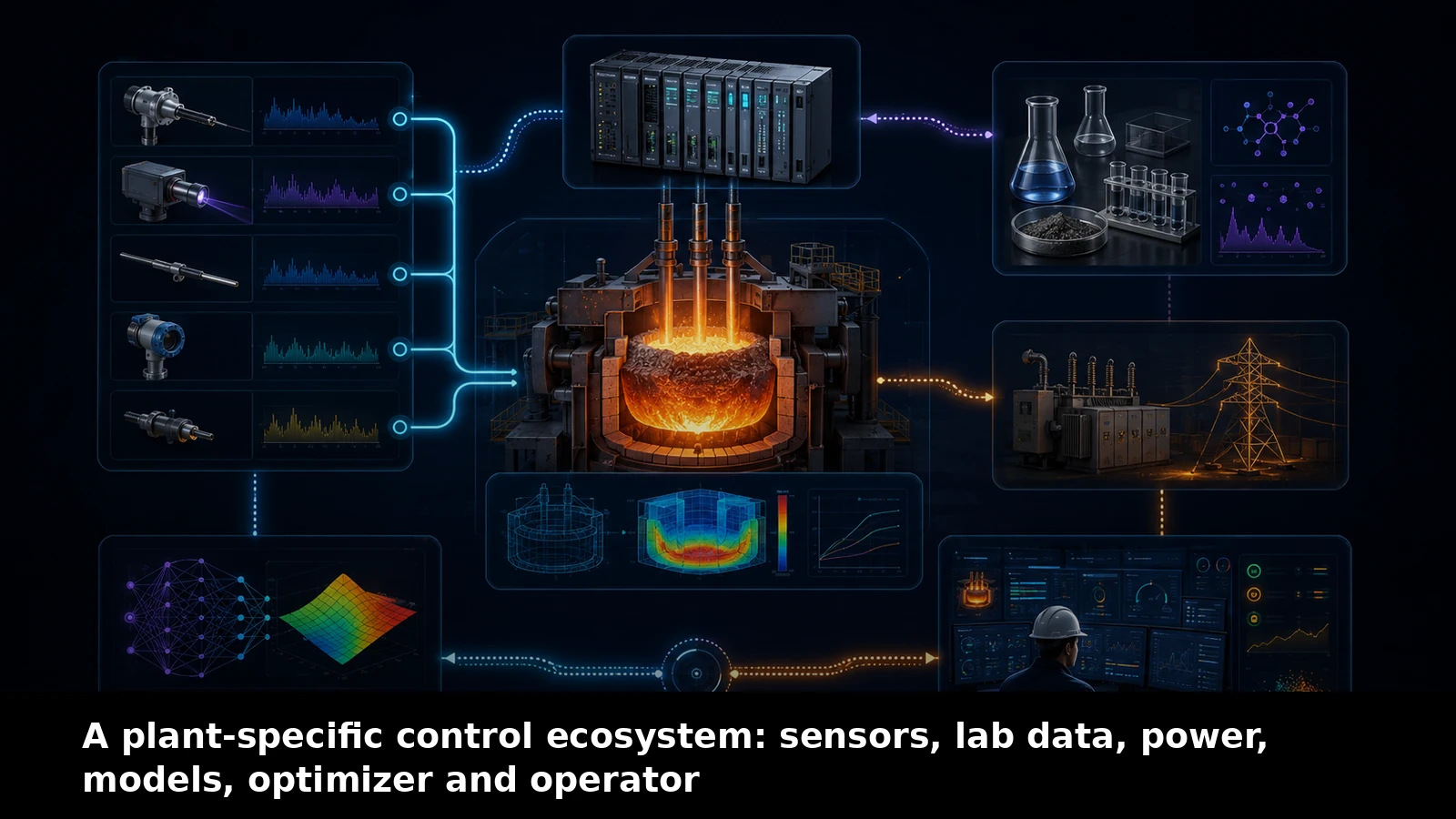
Suggested caption: A useful ferroalloy digital twin connects sensors, lab data, power systems, furnace models, optimization logic and operator action.
In high-carbon ferrochrome smelting, small changes in chromite chemistry, coke quality, fluxing and slag condition can influence chromium recovery and specific energy. A plant-specific model can help the team estimate chromium reporting to metal, chromium loss to slag/fume, slag liquidus tendency, reductant balance and power-feed response.
Possible digital-twin outputs include:
Manganese-alloy production is sensitive to MnO loss, coke balance, slag basicity, silica activity and furnace temperature. SiMn production adds a delicate silicon-reduction objective: the furnace has to drive enough Si reduction without creating avoidable energy loss or excessive instability.
A digital-twin approach can support:
FeSi furnaces require strong control over quartz quality, carbon source blend, permeability, electrode penetration and gas flow. Silicon loss through SiO formation, dust and off-gas-related pathways can be economically significant. A suitable model can connect feed characteristics with energy distribution, reduction state and expected silicon recovery.
Possible outputs include:
The strongest pilot is not the most complicated one. The strongest pilot is the one connected to a repeated operating decision that is expensive when wrong.
A ferroalloy plant can begin with one high-value question:
Can we reduce specific energy while maintaining alloy chemistry and metal recovery?
or:
Can we reduce chromium or manganese loss to slag by giving the operator a better real-time estimate of slag condition and reduction balance?
or:
Can we stabilize electrode behaviour and power-feed matching before it becomes a production problem?
This is the right way to think about a digital twin. It is not a generic software purchase. It is a focused operating system for a measurable metallurgical decision.
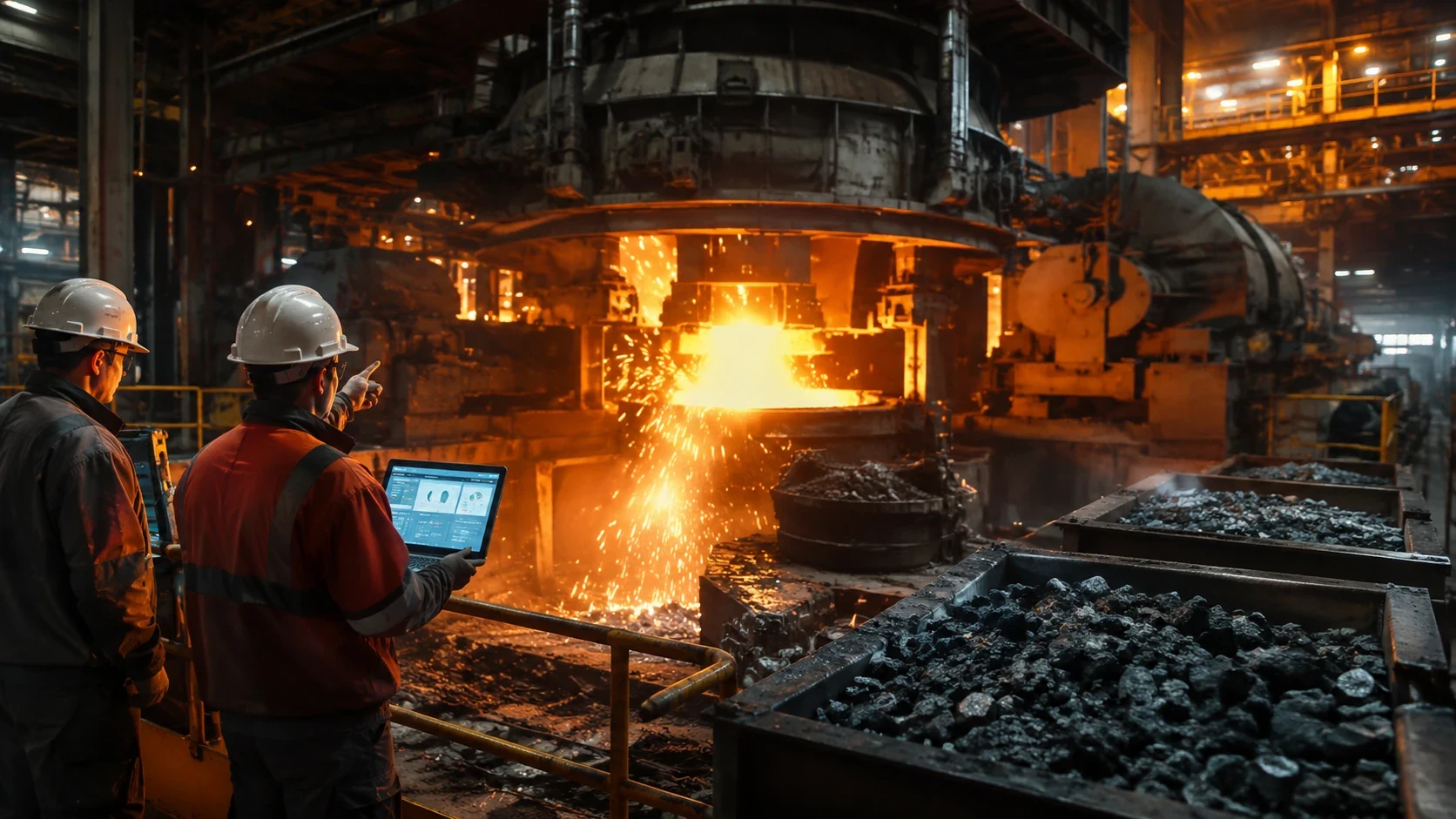
Suggested caption: ExtractMet supports knowledge-based solutions and training for ferroalloy production and submerged-arc-furnace operations.
A plant-ready ferroalloy process-control project can be structured in five stages.
Stage 1: Diagnose. Define the performance gap, plant constraints and KPIs: kWh/t, recovery, tap chemistry, slag loss, electrode consumption, downtime, refractory life, fume/dust loss and cost per tonne.
Stage 2: Measure. Audit tags, lab data, raw-material records, production logs, tap records and historical events. Clean the data and identify what can be trusted.
Stage 3: Model. Build heat, mass, elemental, thermochemical, electrical and data-driven models around the specific furnace and alloy route.
Stage 4: Validate. Test the model against historical data, plant trials, metallurgical audits and operating experience. The model must explain real events, not only fit averages.
Stage 5: Implement. Convert the validated model into dashboards, soft sensors, reports, recommendations, operator training, management KPIs or closed-loop advisory logic where appropriate.
This staged approach is aligned with ExtractMet's broader working philosophy: diagnose, measure, model, validate and implement practical operating strategies.
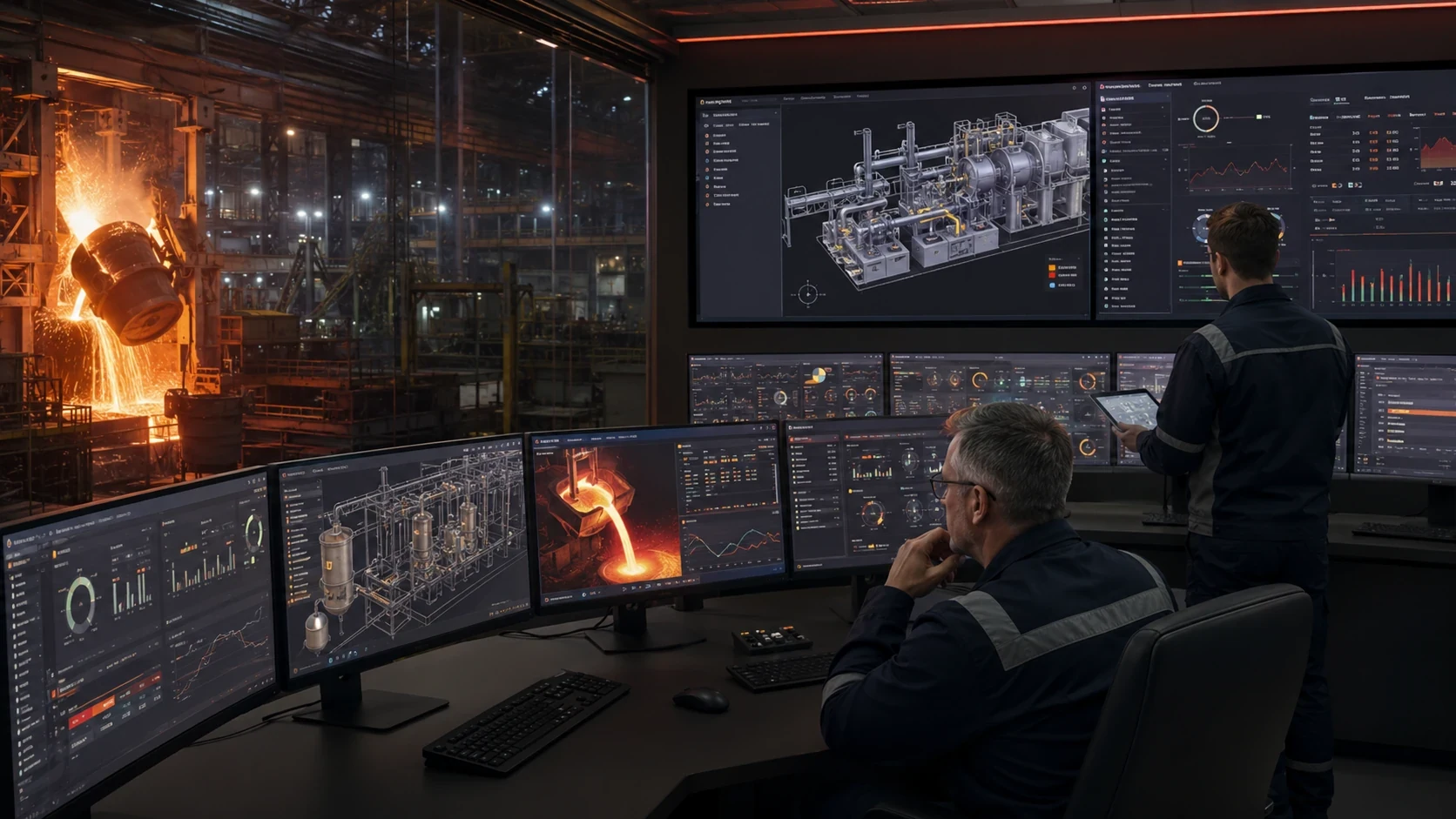
Suggested caption: The most useful models are those validated with plant evidence and translated into plant decisions.
Depending on plant data availability and project scope, a focused pilot can deliver:
The key is that every output must be tied to a plant decision. Otherwise, the project becomes another dashboard rather than a performance tool.
Ferroalloy production is not a pure software problem. It is a metallurgical problem that needs software as a delivery mechanism.
ExtractMet Private Limited brings the combination that ferroalloy producers need: extractive-metallurgy depth, process-control thinking, modelling and simulation capability, plant-data analysis, AI/ML awareness and practical shop-floor orientation. The same engineering logic can support ferrochrome, ferromanganese, silicomanganese, ferrosilicon and related high-temperature smelting operations.
The objective is not to replace the operator. The objective is to give the operator, process engineer and plant management a better decision layer.
When the furnace becomes more transparent, the plant can act earlier, test changes more safely and defend performance improvements with evidence.
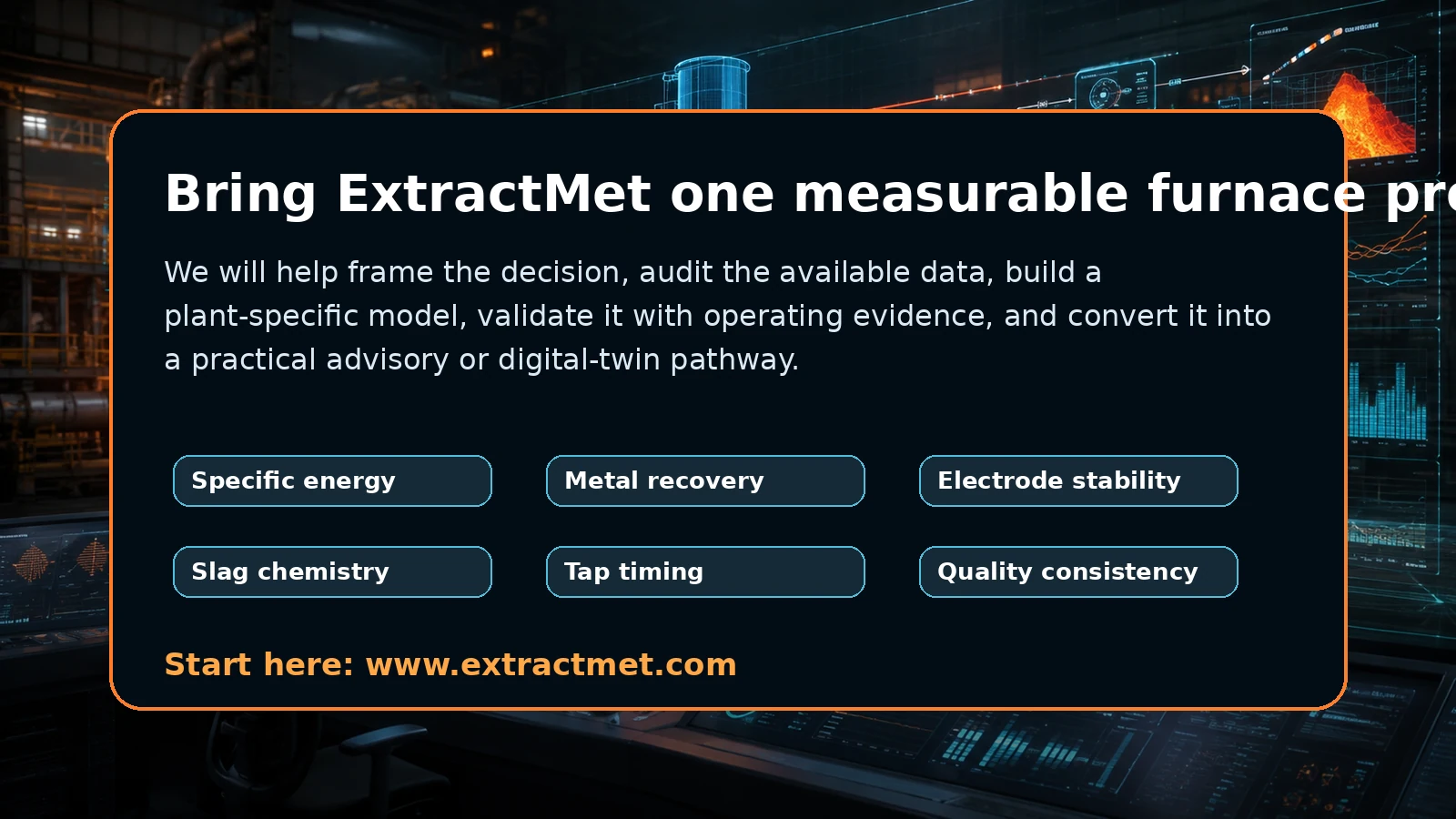
If your ferroalloy plant is struggling with energy intensity, metal recovery, electrode instability, slag variation, inconsistent tap chemistry, refractory risk, ore-blend changes or unexplained campaign-to-campaign variation, start with one measurable question.
Bring that question to ExtractMet. The team can help frame the decision, audit the data, build and validate a plant-specific model, and convert the result into a practical process-control or digital-twin pathway.
Visit: www.extractmet.com
Explore: Digital twins | Model catalogue | Online model demo hub
Contact: info@extractmet.com
Ferroalloys, Process Control, Digital Twins, Metallurgy, Industrial AI