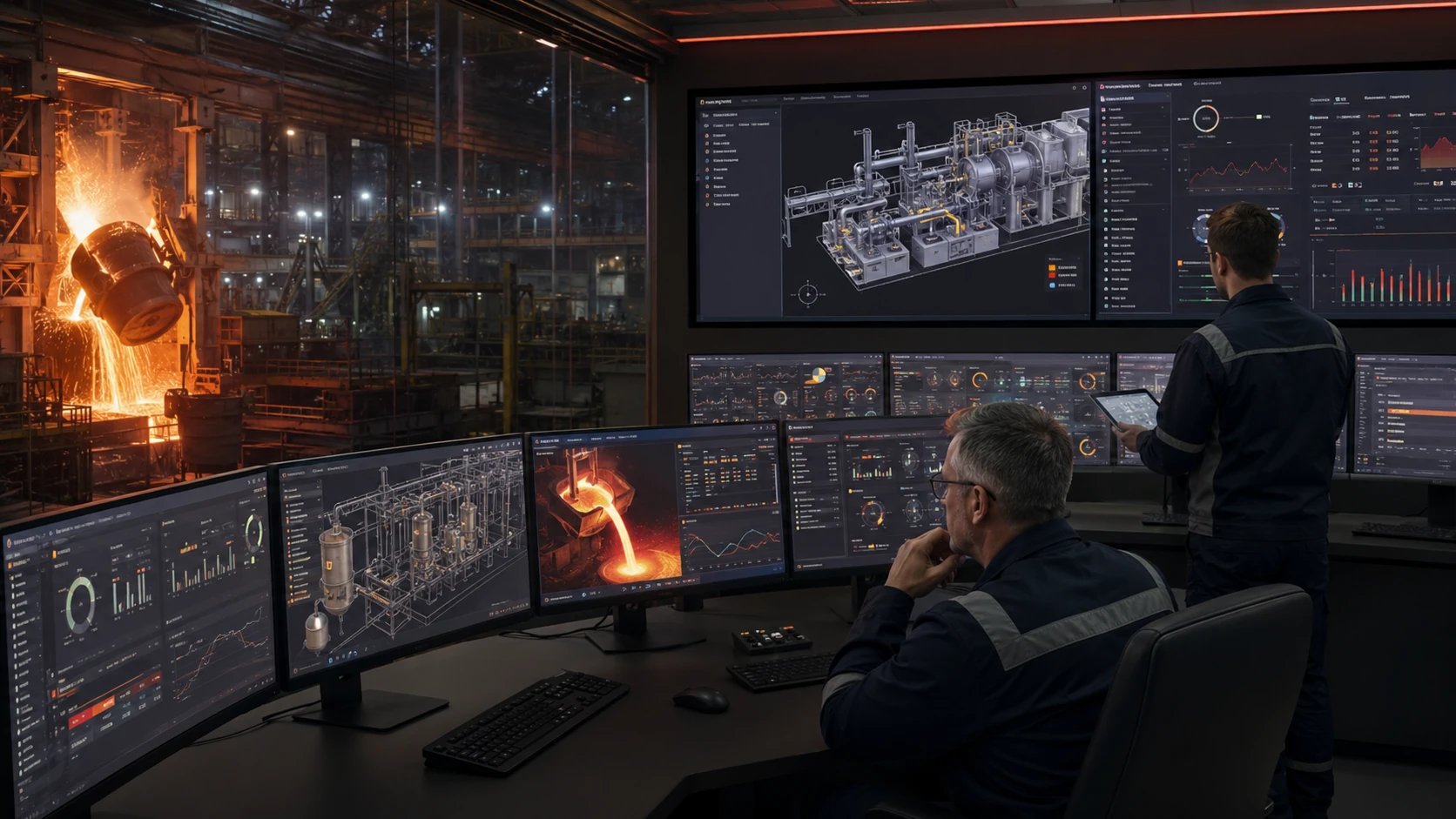
Physics · Plant data · Prediction · Optimization
Digital twins for metallurgical operations
Plant-specific virtual process representations that reconcile live data with engineering models to estimate hidden process states, forecast outcomes and support better operating decisions.
What makes it a digital twin
More than a dashboard—and more useful than a stand-alone simulation
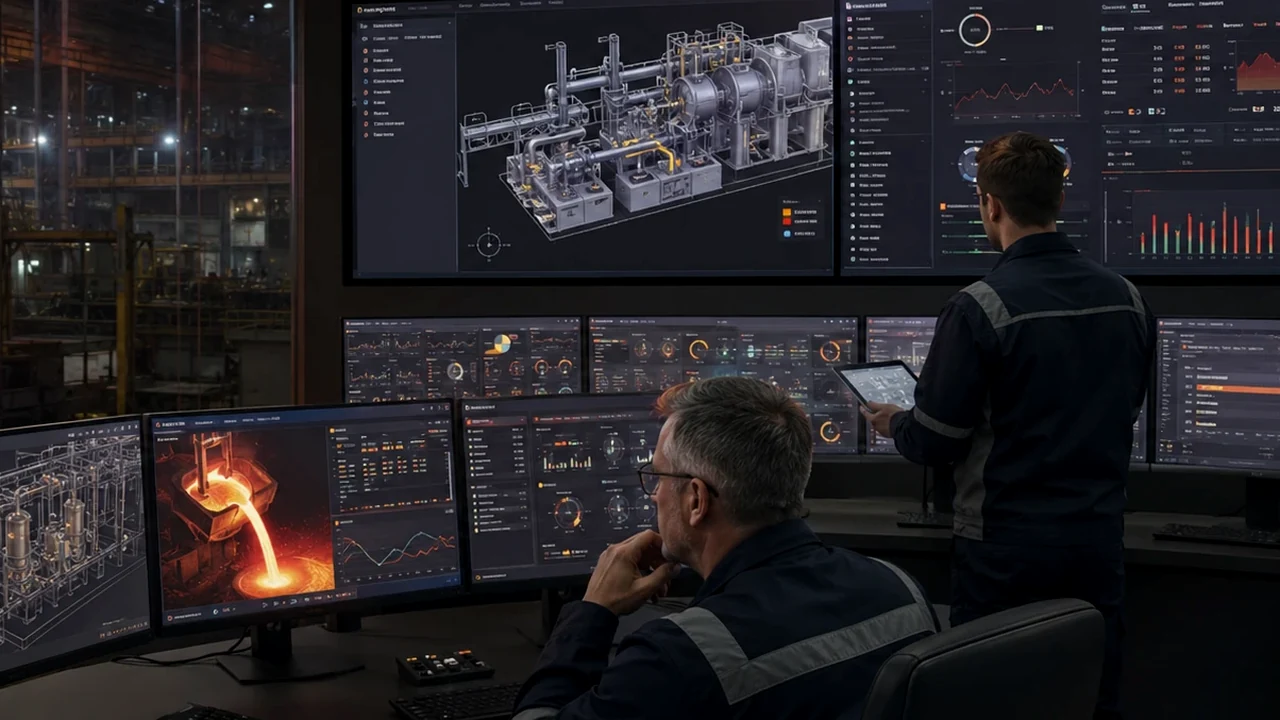
A useful process twin continuously connects the physical plant, process knowledge and operational decisions.
ExtractMet’s approach starts with first-principles mass, elemental and heat balances, reaction thermodynamics, kinetics and transport phenomena. These models are then calibrated against plant measurements and augmented—where beneficial—with data reconciliation, soft sensors, statistical models, artificial intelligence and optimization.
The result is a transparent decision-support layer that can explain the current state, forecast likely endpoints, compare alternative actions and quantify trade-offs involving quality, productivity, energy, cost and emissions.
Reference architecture
Five connected layers
The architecture can be scaled from an offline engineering model to an advisory Level-II system or an integrated real-time twin.
Data layer
PLC/DCS tags, laboratory data, material analyses, events and production records.
Physics layer
Balances, thermodynamics, kinetics, heat transfer, fluid flow and phase behaviour.
State estimation
Data reconciliation, soft sensors, parameter adaptation and uncertainty checks.
Prediction
Endpoint, quality, energy, yield, emissions and abnormal-condition forecasting.
Decision layer
What-if analysis, optimization, operator advice, alerts and management KPIs.
Model portfolio
Digital-twin applications across ferrous and non-ferrous metallurgical operations
Each model is modular. The calculation depth, update frequency, interfaces and outputs are selected according to the plant problem and available data.
 DT-01
DT-01Basic Oxygen Furnace (BOF)
A heat-resolved model of oxygen steelmaking that links oxygen blowing, scrap melting, slag formation and coupled slag–metal–gas reactions to endpoint temperature and chemistry.
Tracks and predicts
- Hot-metal and scrap inventory
- Bath C, Si, Mn, P and temperature
- Slag FeO, basicity and mass
- Off-gas flow and CO/CO₂
Supports decisions on
- Oxygen and flux strategy
- Endpoint prediction
- Post-combustion and energy use
- Slopping and yield-risk studies
 DT-02
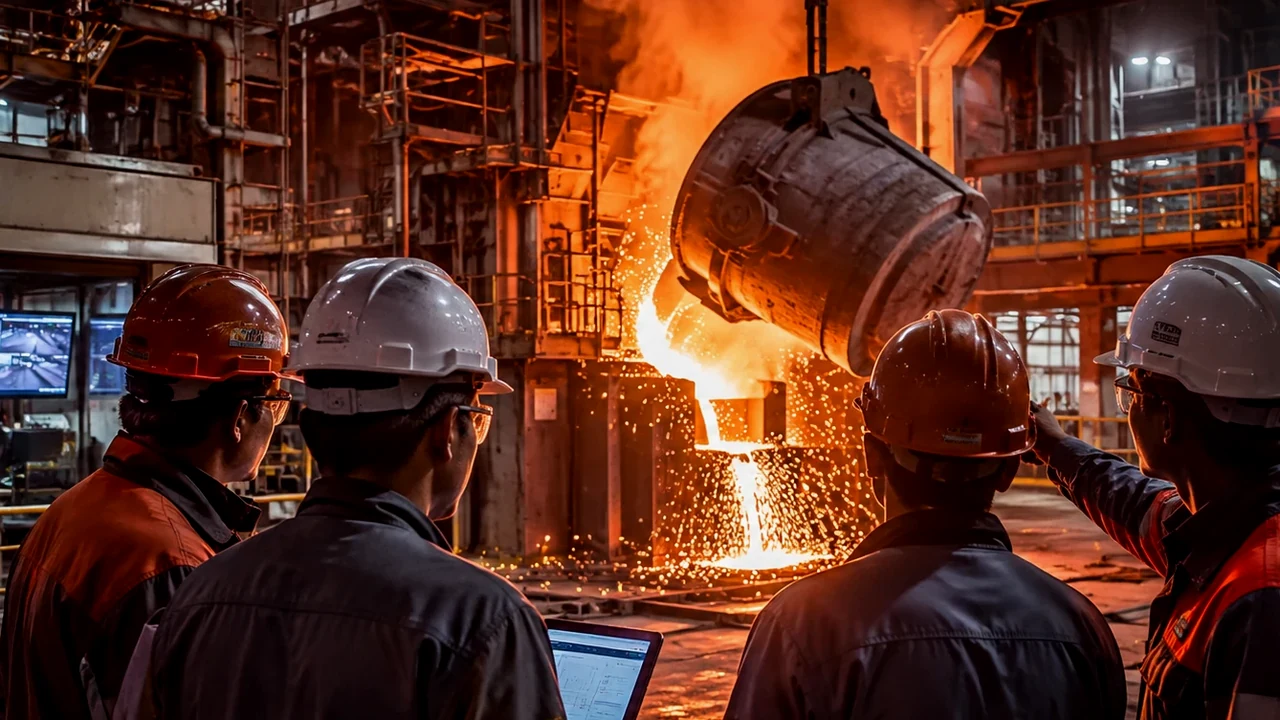
DT-02Electric Arc Furnace (EAF)
A dynamic furnace representation for scrap/DRI melting, electrical and chemical energy, oxygen injection, burners, carbon additions, slag foaming and tapping conditions.
Tracks and predicts
- Scrap/DRI melting progress
- Bath and slag temperature
- Metal and slag chemistry
- Electrical, oxygen and fuel energy
Supports decisions on
- Charge-mix optimization
- Power and oxygen profiles
- Foamy-slag practice
- Energy, yield and tap-time control
 DT-03
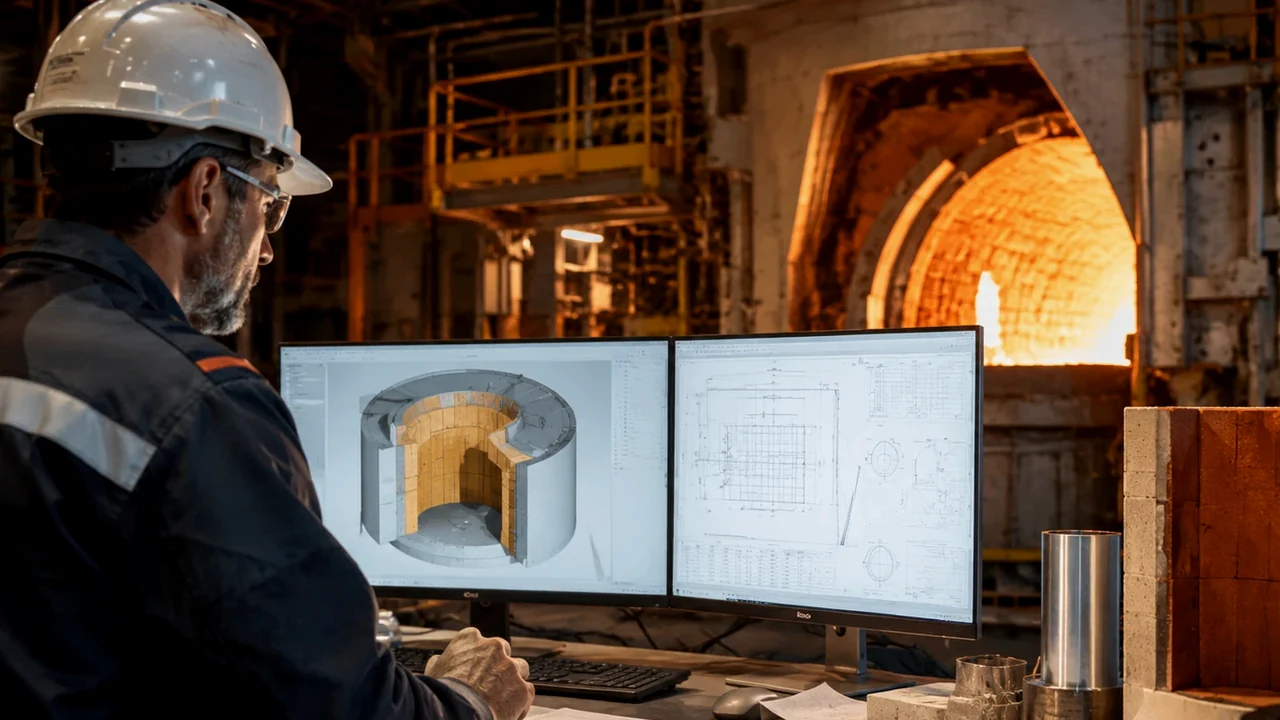
DT-03Induction Furnace Steelmaking
A configurable induction-furnace model focused on charge melting, electrical efficiency, bath homogenization, alloy and flux additions, yield and grade achievement.
Tracks and predicts
- Solid/liquid charge inventory
- Bath temperature and chemistry
- Slag quantity and chemistry
- Energy and melting efficiency
Supports decisions on
- Charge sequencing
- Grade transition planning
- Alloy recovery and yield
- Tap temperature and power strategy
 DT-04
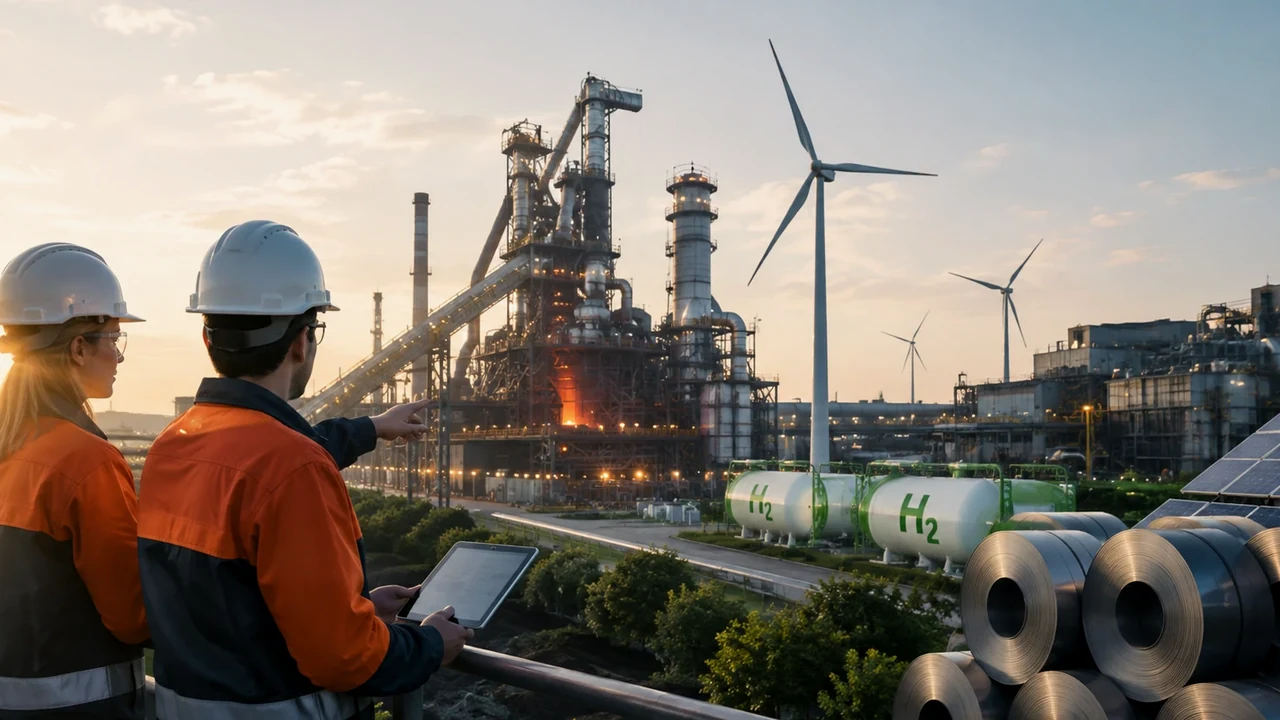
DT-04MIDREX Direct Reduction
A shaft-furnace thermochemical model that reconciles solid feed, reducing-gas chemistry, reduction reactions, carbon deposition/reforming and the furnace heat balance.
Tracks and predicts
- DRI production and metallization
- Exit-gas flow and composition
- Bustle-gas demand
- Heat requirement and reduction degree
Supports decisions on
- Hydrogen and COG injection studies
- Gas utilization improvement
- Productivity and energy assessment
- Green-ironmaking scenario analysis
 DT-05
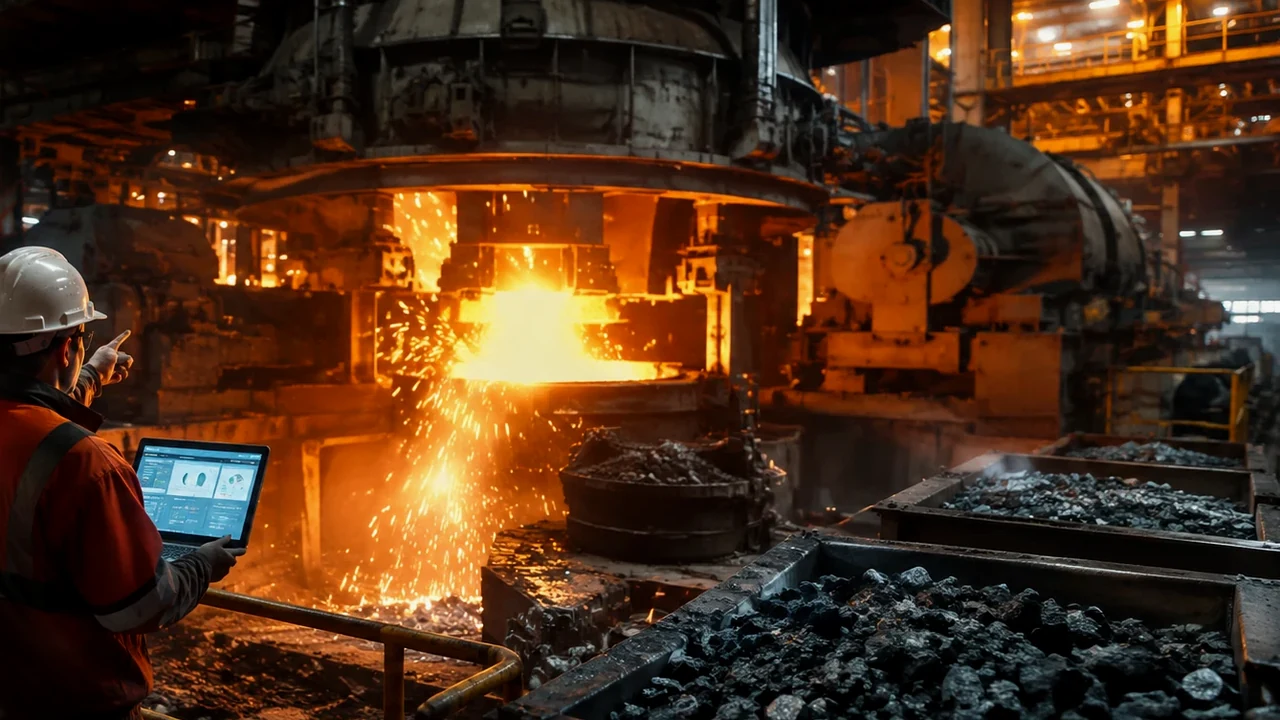
DT-05COREX Smelting Reduction
An integrated reduction-shaft and melter-gasifier representation for coal gasification, ore reduction, hot-metal production, gas generation and internal process coupling.
Tracks and predicts
- Reduction-shaft performance
- Melter-gasifier mass and heat balance
- Hot-metal and slag production
- Export-gas composition and energy
Supports decisions on
- Coal/coke and oxygen optimization
- Burden and fuel-quality studies
- Gas-utilization improvement
- Production and emissions scenarios
 DT-06
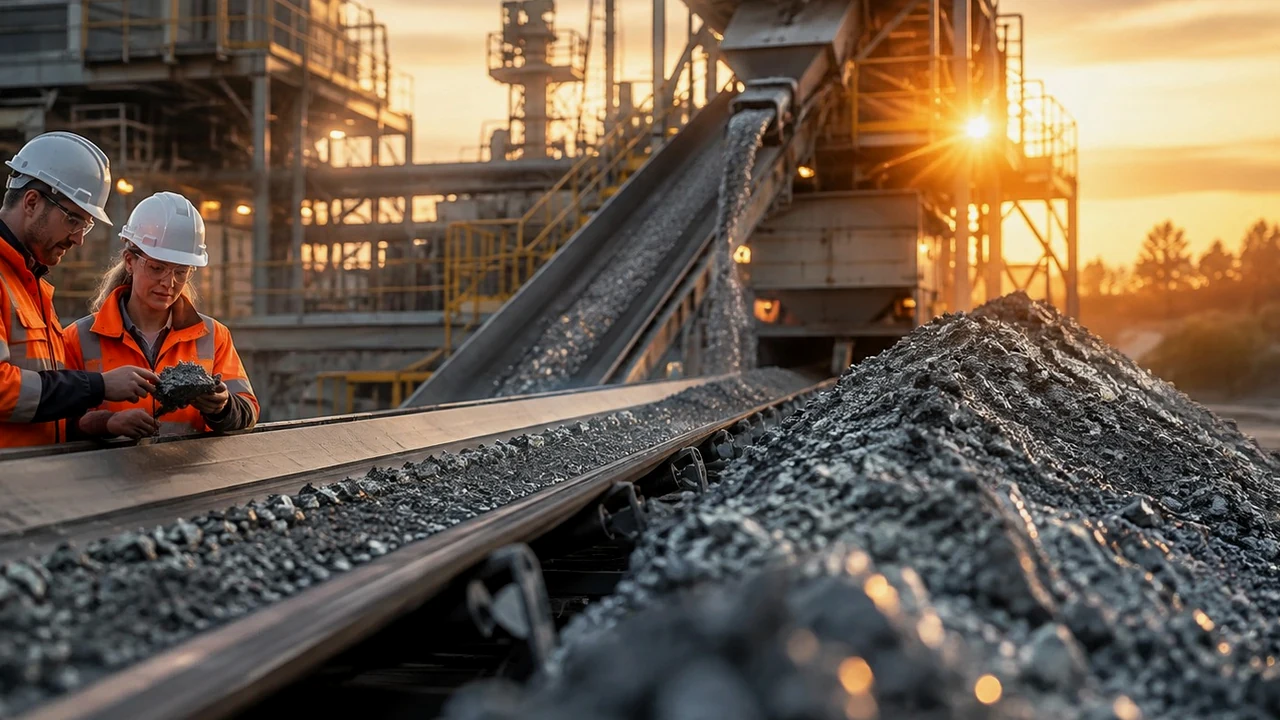
DT-06Blast Furnace Ironmaking
A process twin combining burden, raceway, gas–solid heat and mass transfer, reduction, cohesive-zone behaviour and hot-metal/slag production indicators.
Tracks and predicts
- Top-gas chemistry and temperature
- Fuel rate and productivity
- Reduction and thermal indices
- Hot-metal and slag conditions
Supports decisions on
- Burden-distribution studies
- PCI/coke replacement
- Thermal-state guidance
- CO₂ and fuel-rate reduction
 DT-07
DT-07Secondary Metallurgy: LF, RH and VAD
A ladle-treatment twin for heating, alloy dissolution, mixing, slag–metal refining, deoxidation, desulphurization, inclusion control and vacuum degassing.
Tracks and predicts
- Steel temperature and composition
- Hydrogen and nitrogen removal
- Slag chemistry and refining potential
- Alloy recovery and treatment time
Supports decisions on
- Heating and stirring schedules
- Alloy/flux additions
- Vacuum-treatment endpoint
- Clean-steel and temperature control
 DT-08
DT-08Continuous Casting
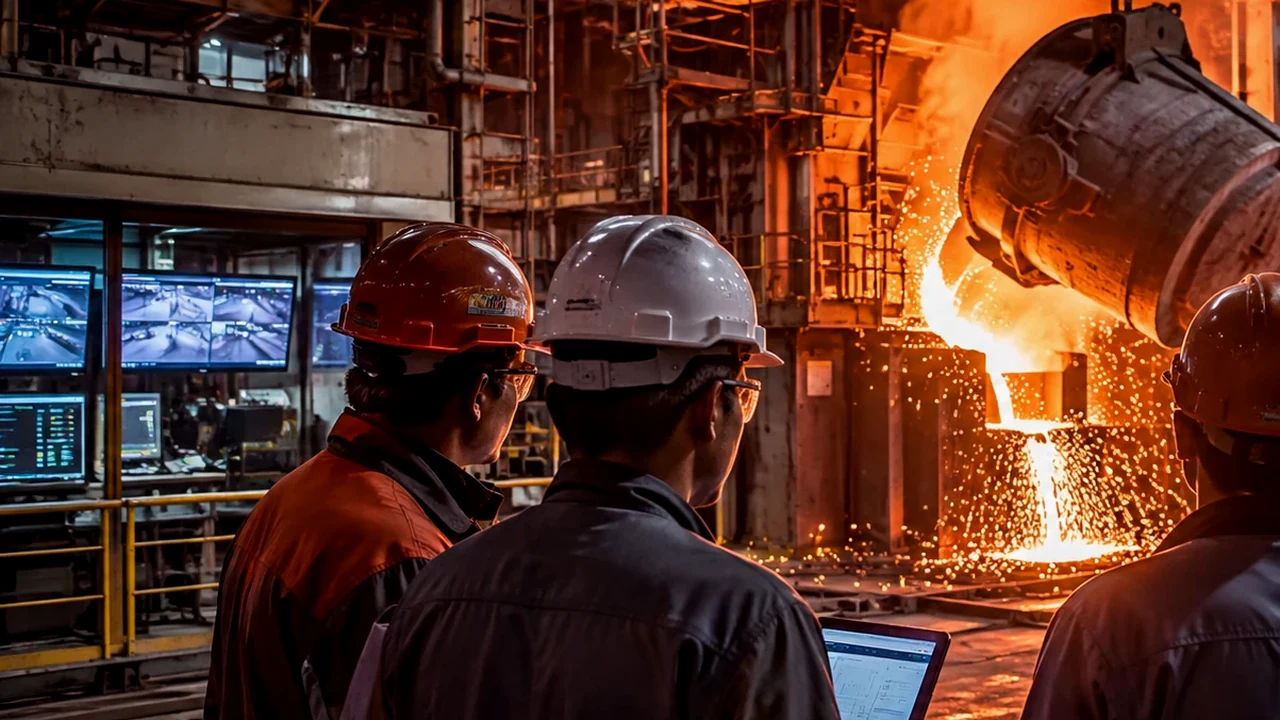
A caster model connecting ladle/tundish conditions, mould heat transfer, shell growth, secondary cooling, solidification and quality-risk indicators.
Tracks and predicts
- Superheat and thermal history
- Shell thickness and solidification length
- Cooling-zone performance
- Quality and breakout-risk indicators
Supports decisions on
- Casting-speed optimization
- Secondary-cooling strategy
- Grade-transition planning
- Defect-risk reduction
 DT-09
DT-09Ferroalloy Submerged-Arc Furnace
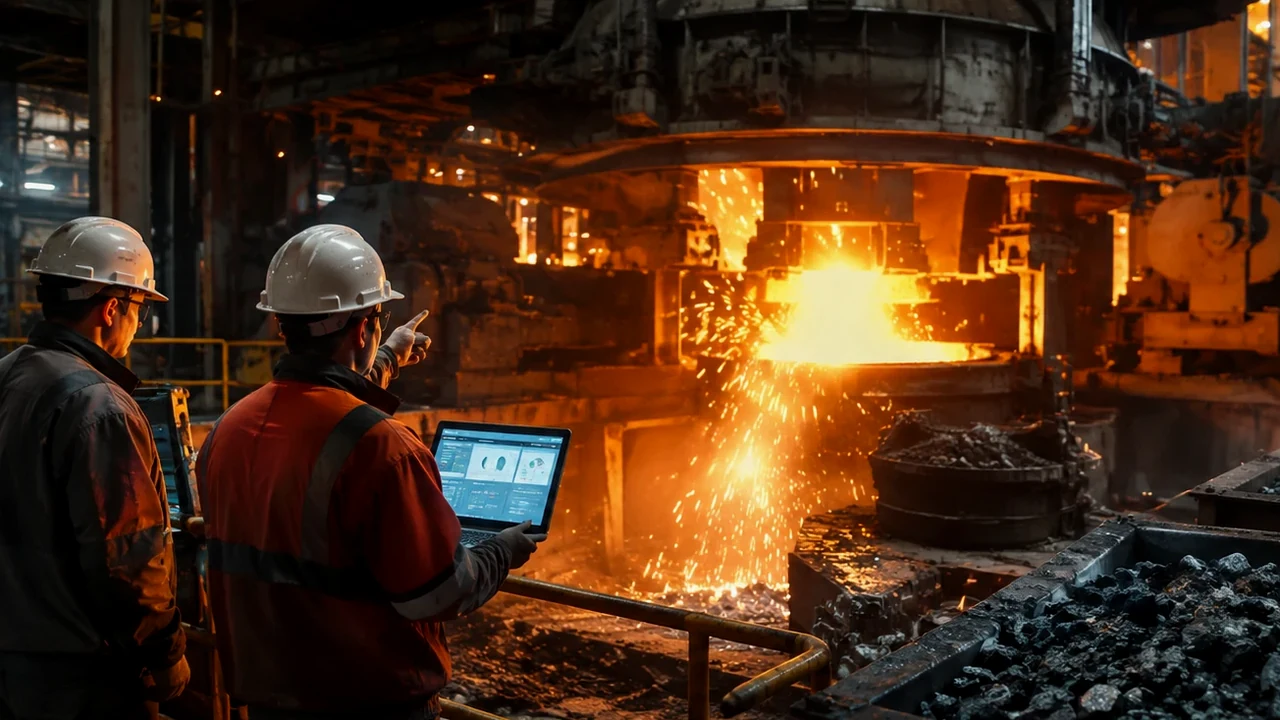
A furnace twin for chromite or manganese-bearing burden, reductant and flux behaviour, electrical operation, slag–metal partition and alloy recovery.
Tracks and predicts
- Charge and electrical balance
- Alloy and slag production
- Cr/Fe or Mn recovery
- Slag chemistry and furnace resistance
Supports decisions on
- Charge-mix selection
- Electrode and power strategy
- Recovery optimization
- Energy and environmental assessment
 DT-10
DT-10Plant-wide Optimization & Decarbonization
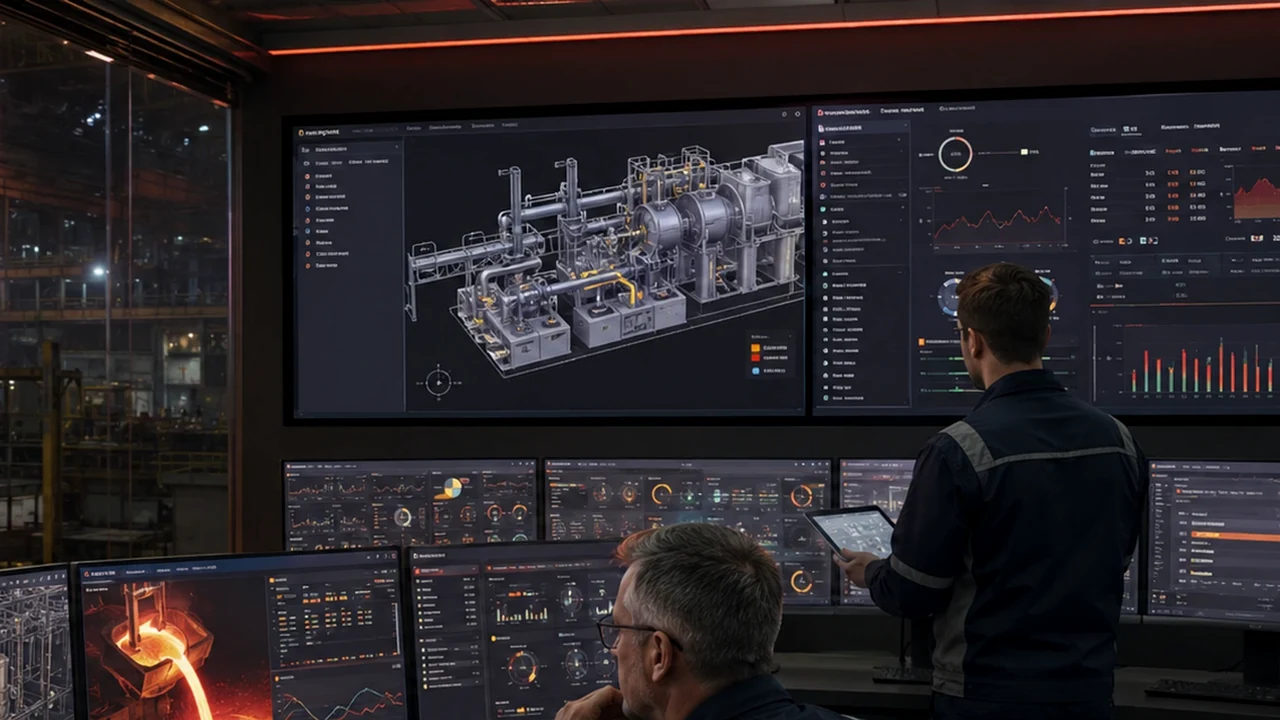
A supervisory layer connecting unit-process models with production planning, utilities, material routing, emissions accounting and economic objectives.
Tracks and predicts
- Process KPIs and constraints
- Energy and gas-network balances
- Material and carbon flows
- Cost and emissions intensity
Supports decisions on
- Production scheduling
- Utility and by-product-gas optimization
- Investment scenario comparison
- Decarbonization roadmap development
 DT-11
DT-11Hall–Héroult Primary Aluminium Smelting
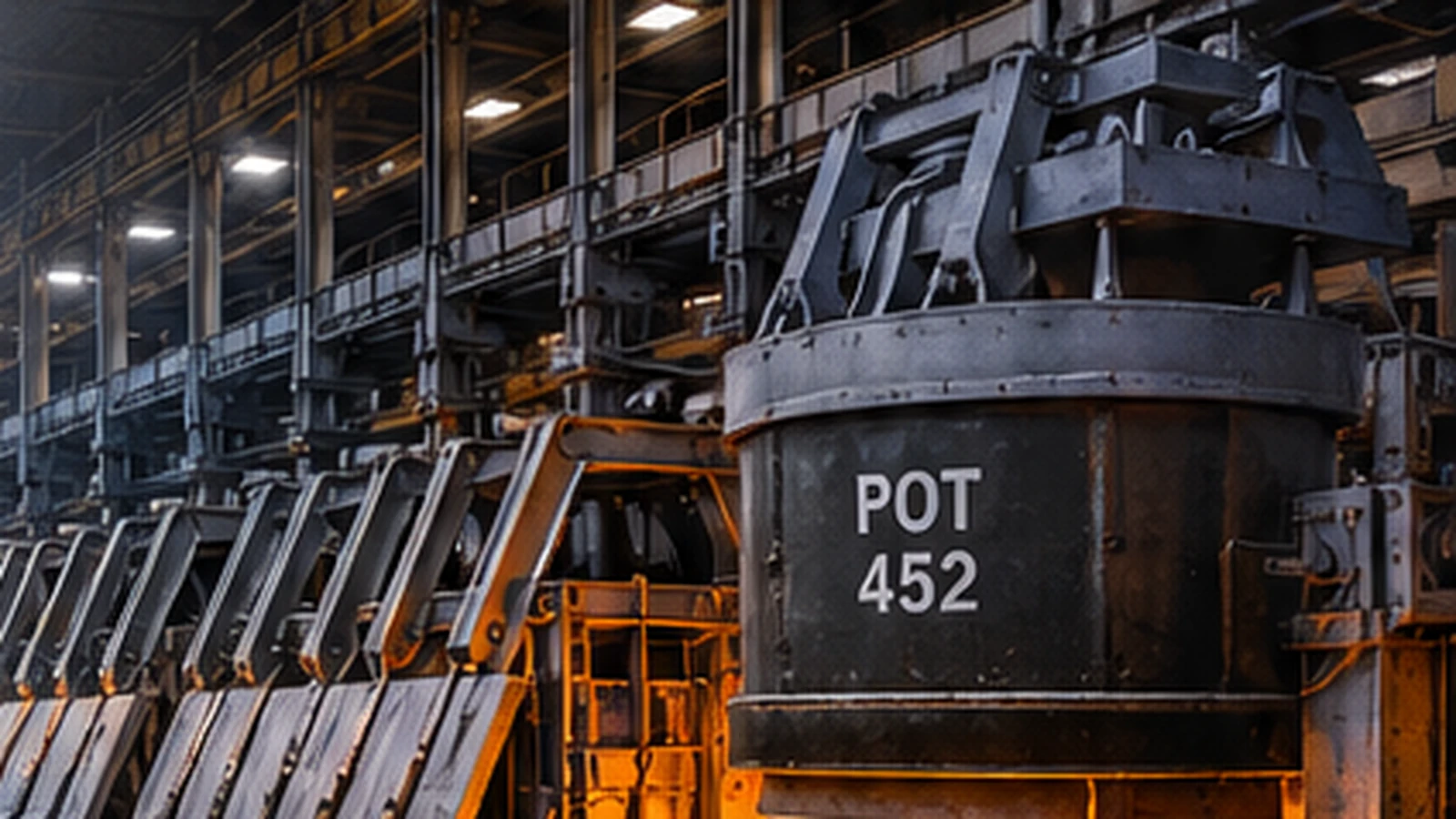
A hybrid electrochemical and thermal process twin for Hall–Héroult reduction cells, combining first-principles pot balances, state estimation and plant-data adaptation.
Tracks and predicts
- Alumina concentration and feed response
- ACD, voltage and resistance indicators
- Thermal condition and energy intensity
- Current efficiency and anode-effect risk
Supports decisions on
- Alumina-feeding strategy
- Voltage/ACD and thermal guidance
- Pot stability and abnormal-condition warning
- Energy and current-efficiency optimization
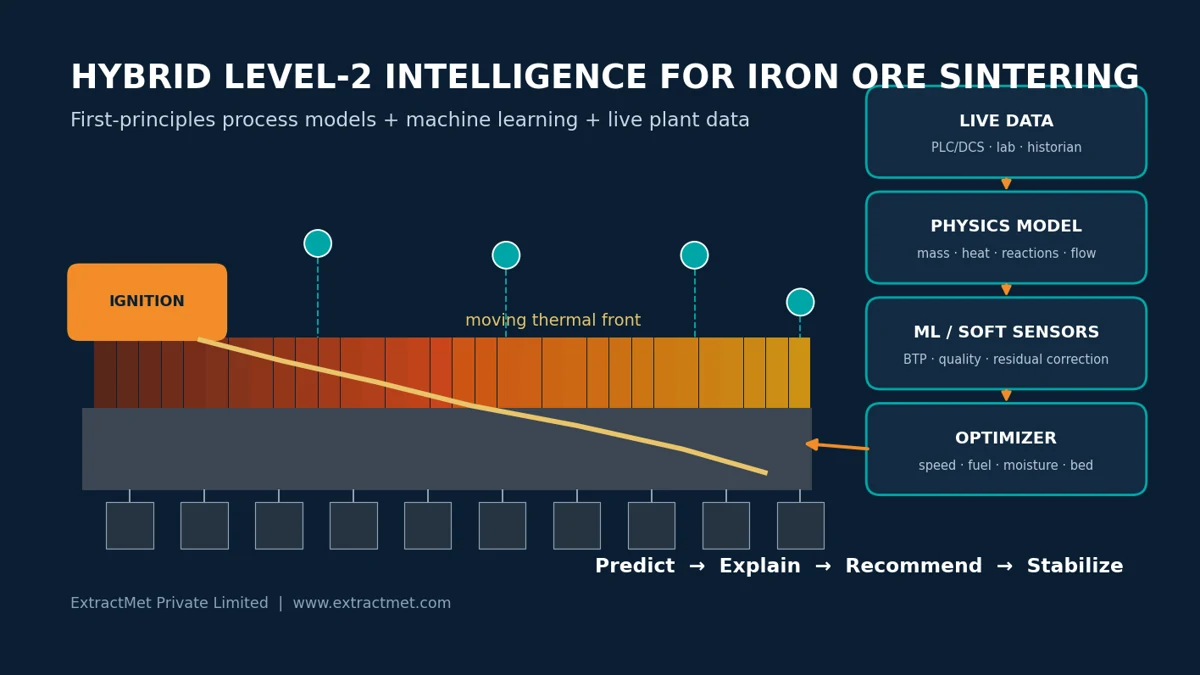 DT-12
DT-12Iron Ore Sintering
A hybrid sinter-strand twin combining first-principles thermal/reaction behaviour, permeability and gas-flow logic, burn-through-point prediction and plant-data intelligence for stable quality and productivity.
Tracks and predicts
- Thermal-front position and BTP
- Bed permeability and suction response
- Fuel/thermal-state indicators
- Productivity and quality-risk indices
Supports decisions on
- Strand speed and bed height
- Moisture and coke-breeze practice
- Ignition and suction conditions
- Quality, fuel-rate and productivity stabilization
Typical value cases
Designed around operational decisions
Endpoint control
Predict temperature, chemistry, reduction degree, casting state or treatment completion before the endpoint is physically sampled.
Energy and fuel optimization
Quantify how power, oxygen, fuels, reductants, gas recycling and operating profiles affect energy and production.
Quality assurance
Relate process history to grade achievement, cleanliness, defect risks, alloy recovery and thermal consistency.
Abnormal-condition guidance
Identify deviations, reconstruct the process state and compare corrective actions within safe operating limits.
Operator training
Use replay and scenario modes to understand process response without disrupting the plant.
Decarbonization planning
Test hydrogen, scrap, DRI, fuel substitution, energy recovery and production-route scenarios before investment.
Delivery pathway
From plant problem to sustained model use
Problem framing
Define decisions, KPIs, constraints, users and success criteria.
Data audit
Map tags, samples, material data, timing, gaps and data quality.
Model build
Develop balances, reactions, state logic and configurable parameters.
Calibration
Fit uncertain parameters using historical heats and campaigns.
Validation
Test unseen data, operating ranges, sensitivity and uncertainty.
Deployment
Implement dashboards, interfaces, training, monitoring and version control.
Validation principles
- Conservation and unit-consistency checks
- Comparison against independent plant datasets
- Residual, sensitivity and uncertainty analysis
- Operating-envelope and failure-mode testing
- Documented assumptions and parameter ownership
Deployment options
- Offline engineering and scenario-analysis tool
- Training simulator and heat/campaign replay
- Operator advisory application
- Level-II integration with historian, LIMS and automation
- Plant-wide optimization and management dashboard
Responsible-use note: Digital twins support engineering and operating decisions but do not replace statutory safeguards, certified automation interlocks, laboratory quality systems or accountable operating authority. Real-time deployment requires plant cybersecurity, interface and change-management approval.
Start with one high-value process decision
A focused pilot—built around one plant problem and validated against historical data—is often the fastest route to a credible digital-twin roadmap.