From Process Data to Process Intelligence: AI, Machine Learning and Digital Twins for Metals Production
A practical guide to converting plant data, metallurgical models and operator knowledge into measurable improvements in quality, energy, yield, productivity and sustainability.
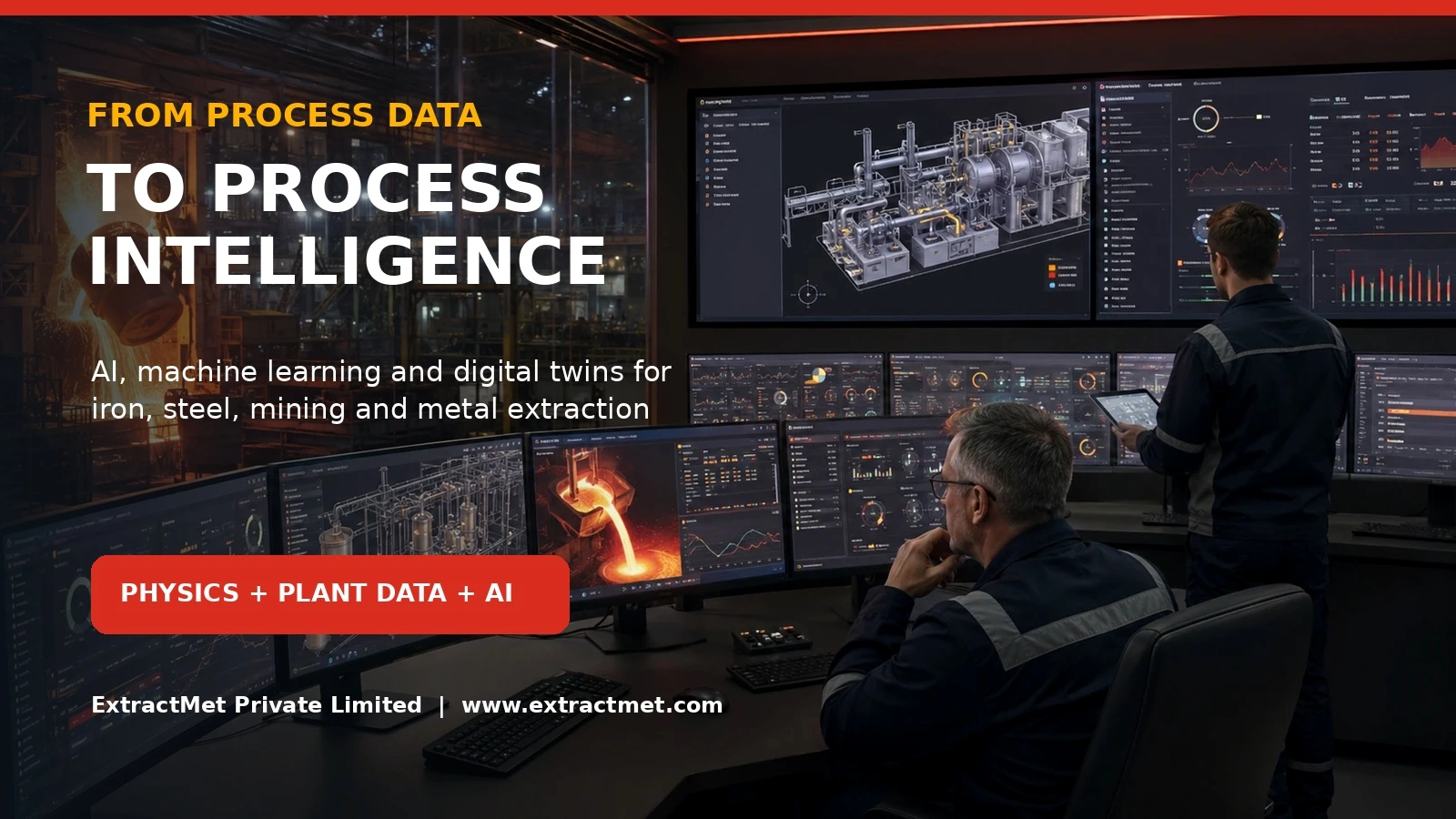
For plant leaders: The opportunity is not to add another dashboard. It is to build a validated decision layer that connects process science, live data and operating action.
A blast furnace, direct-reduction shaft, steelmaking furnace, submerged-arc furnace, flotation circuit or hydrometallurgical plant generates a continuous stream of information. Temperatures, flows, power, pressure, chemistry, gas composition, laboratory results, alarms, operator actions and production outcomes are recorded every minute - often every second.
Yet many plants still make critical decisions using isolated tags, delayed laboratory measurements, fixed rules and the experience of a small number of specialists. The data exists. The process knowledge exists. The missing layer is process intelligence: a system that converts both into timely, transparent and plant-specific guidance.
That is where artificial intelligence, machine learning, data-based modelling, advanced process control and digital twins can create value. But in metallurgy, the winning approach is rarely a black-box algorithm working alone. The strongest systems combine first-principles engineering with validated plant data and domain expertise.
The next productivity frontier is already inside the plant
Metals businesses operate with narrow margins, high energy intensity, variable raw materials and costly process deviations. A small improvement in endpoint accuracy, alloy recovery, fuel rate, yield, campaign stability or specific energy can materially change annual profitability.
The International Energy Agency has noted that, in energy-intensive sectors such as iron and steel, a 10% energy saving can have a profit effect comparable to increasing sales by roughly 4% to 16%. The exact value depends on the plant, market and cost structure, but the message is clear: process efficiency is not a secondary technical issue - it is a business strategy.
Modern plants therefore need more than historical dashboards. They need models that can answer operational questions: What state is the process in now? What is likely to happen next? Which action is safest and most economical? How confident is the recommendation?
Why generic AI is not enough for high-temperature metallurgy
Industrial AI is often presented as a simple sequence: collect data, train a model and deploy a prediction. That can work for stable, well-instrumented problems. Metallurgical processes are more difficult.
Measurements arrive at different frequencies. Laboratory values may be delayed. Sensors drift. Raw materials change. Important states - melt fraction, reaction progress, slag condition, refractory wear, cohesive-zone position or degree of reduction - may not be directly measured. Process regimes also shift with grades, campaigns, maintenance, operating philosophy and equipment condition.
A purely data-driven model may perform well on familiar historical conditions and fail when the plant moves outside its training envelope. A purely first-principles model may be transparent but insufficiently calibrated to site-specific reality. The practical answer is hybrid intelligence.
Hybrid intelligence: physics + plant data + AI/ML
A plant-ready system should use conservation laws and metallurgical science as its backbone, then use data science where it adds the most value.
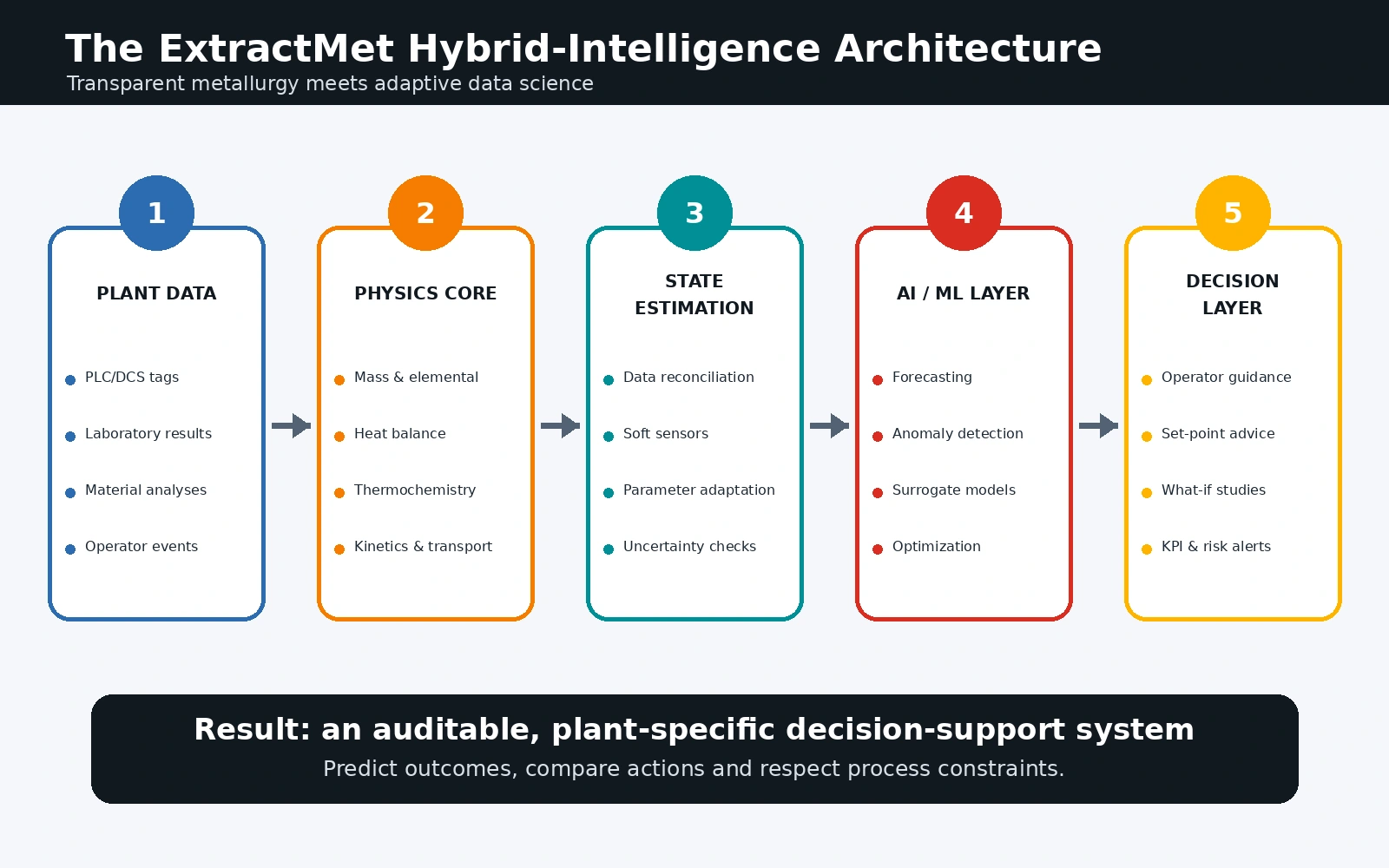
The physics layer can include mass, elemental and heat balances; thermodynamics; reaction kinetics; heat and mass transfer; phase behaviour; gas-solid or slag-metal interactions; and equipment constraints. The data layer brings in PLC/DCS tags, laboratory analyses, material certificates, event records, maintenance data and operator actions. AI and machine learning can then support soft sensing, parameter adaptation, anomaly detection, endpoint prediction, surrogate modelling and constrained optimization.
This hybrid structure is easier to audit, easier to troubleshoot and more robust when operating conditions change. It also makes the recommendation explainable to operators and process engineers - a critical requirement before any model is trusted on the shop floor.
High-value applications across the metals value chain
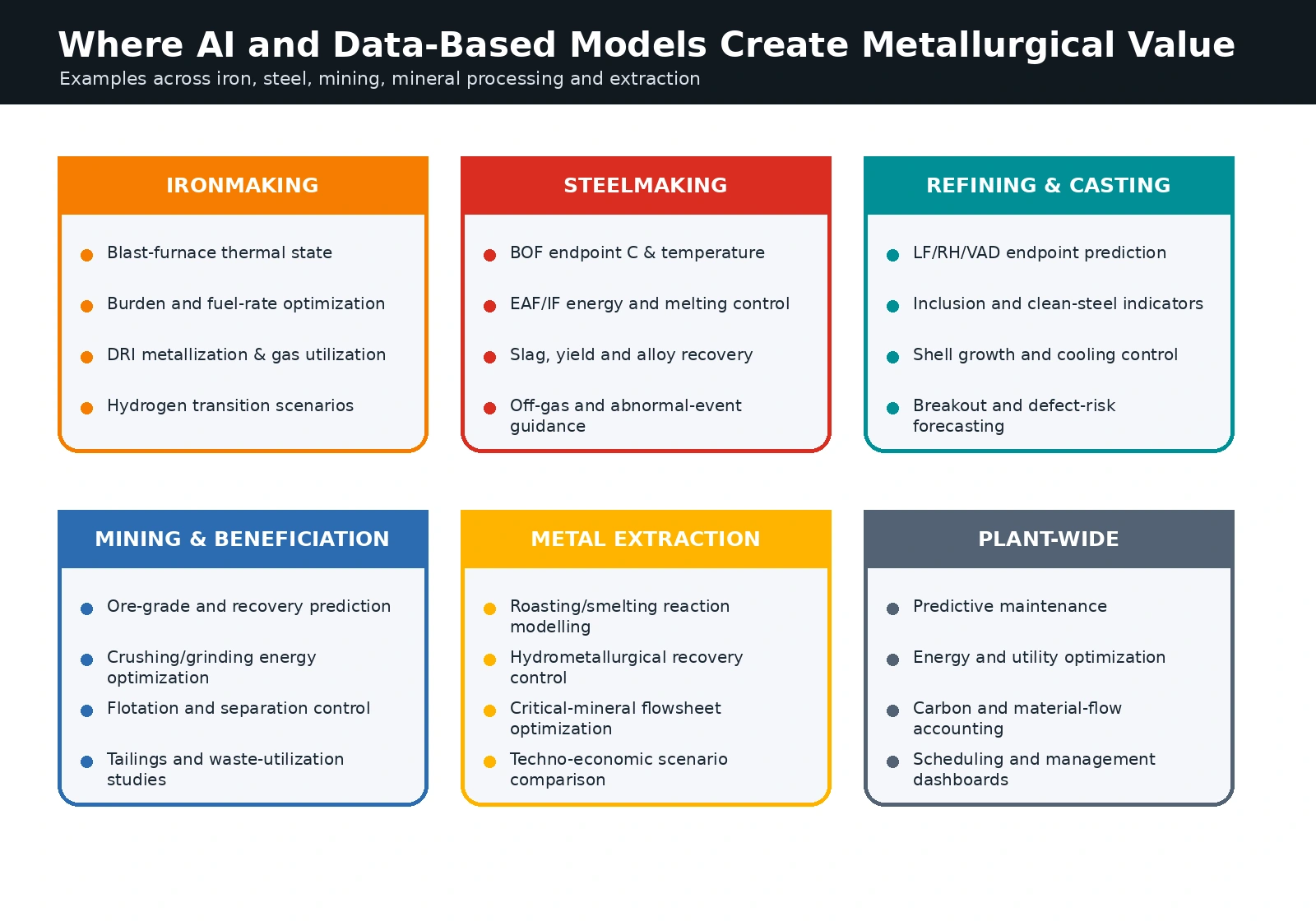
In ironmaking, intelligent models can support blast-furnace thermal-state estimation, burden and fuel optimization, top-gas interpretation, DRI metallization prediction, reducing-gas utilization and hydrogen-transition studies.
In BOF, EAF and induction-furnace steelmaking, they can track melting progress, metal and slag inventories, bath temperature and chemistry, oxygen and fuel use, off-gas behaviour, endpoint risks, alloy recovery and tapping conditions. In secondary metallurgy, the same approach can estimate treatment endpoints, alloy dissolution, temperature loss, desulphurization, degassing and clean-steel indicators.
For continuous casting, models can link superheat, casting speed, mould heat transfer, shell growth and secondary cooling to quality and breakout risk. In ferroalloy production, data-driven and first-principles models can support charge mix, electrical operation, electrode practice, slag chemistry and metal recovery.
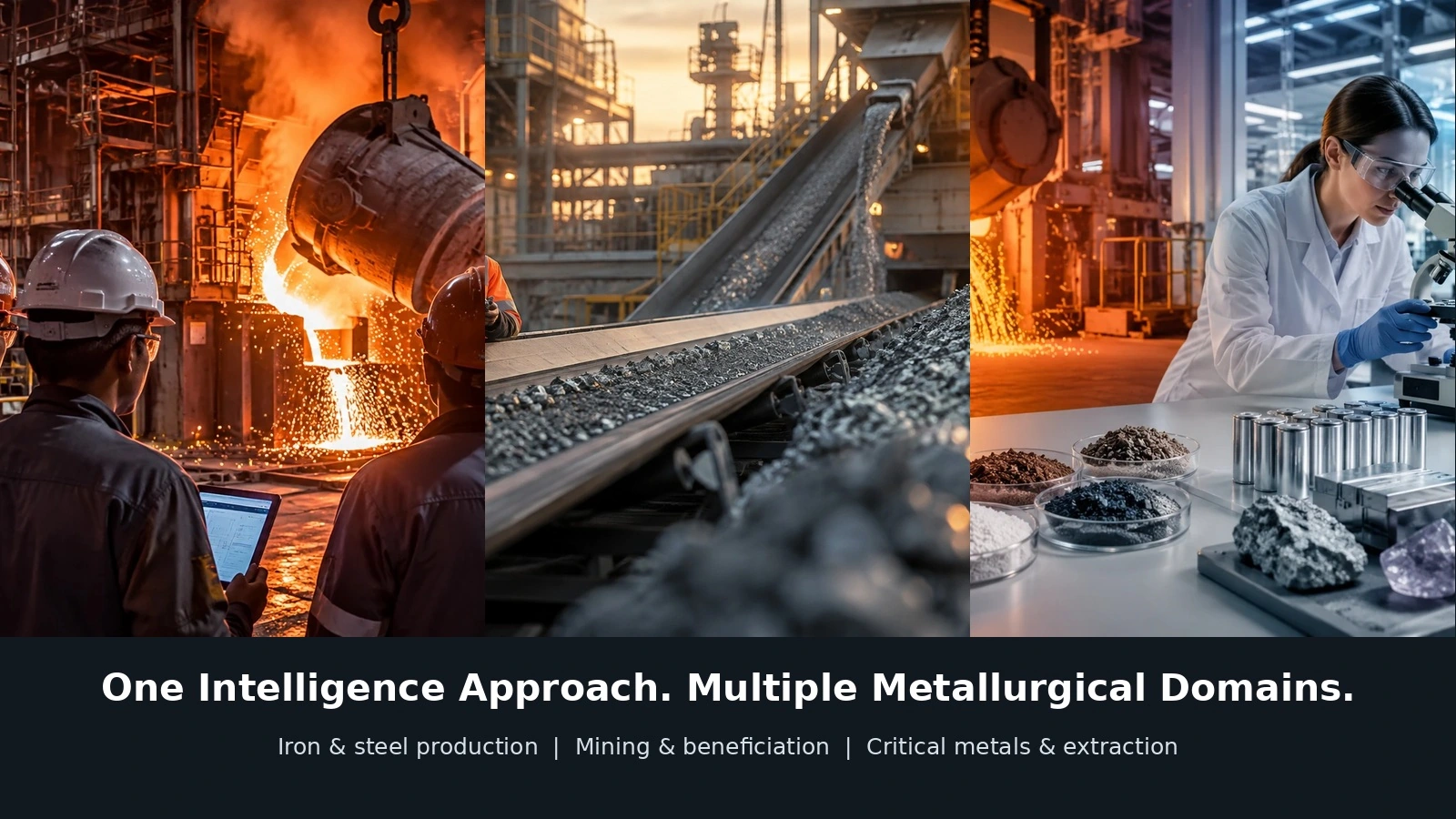
Mining and mineral-processing applications include ore-grade and recovery prediction, crushing and grinding energy optimization, flotation control, separation performance, geometallurgical reconciliation, equipment health and tailings-management studies. In metal extraction, AI-enhanced models can be applied to roasting, smelting, leaching, solvent extraction, precipitation, refining and critical-mineral flowsheet optimization.
A digital twin is not a dashboard
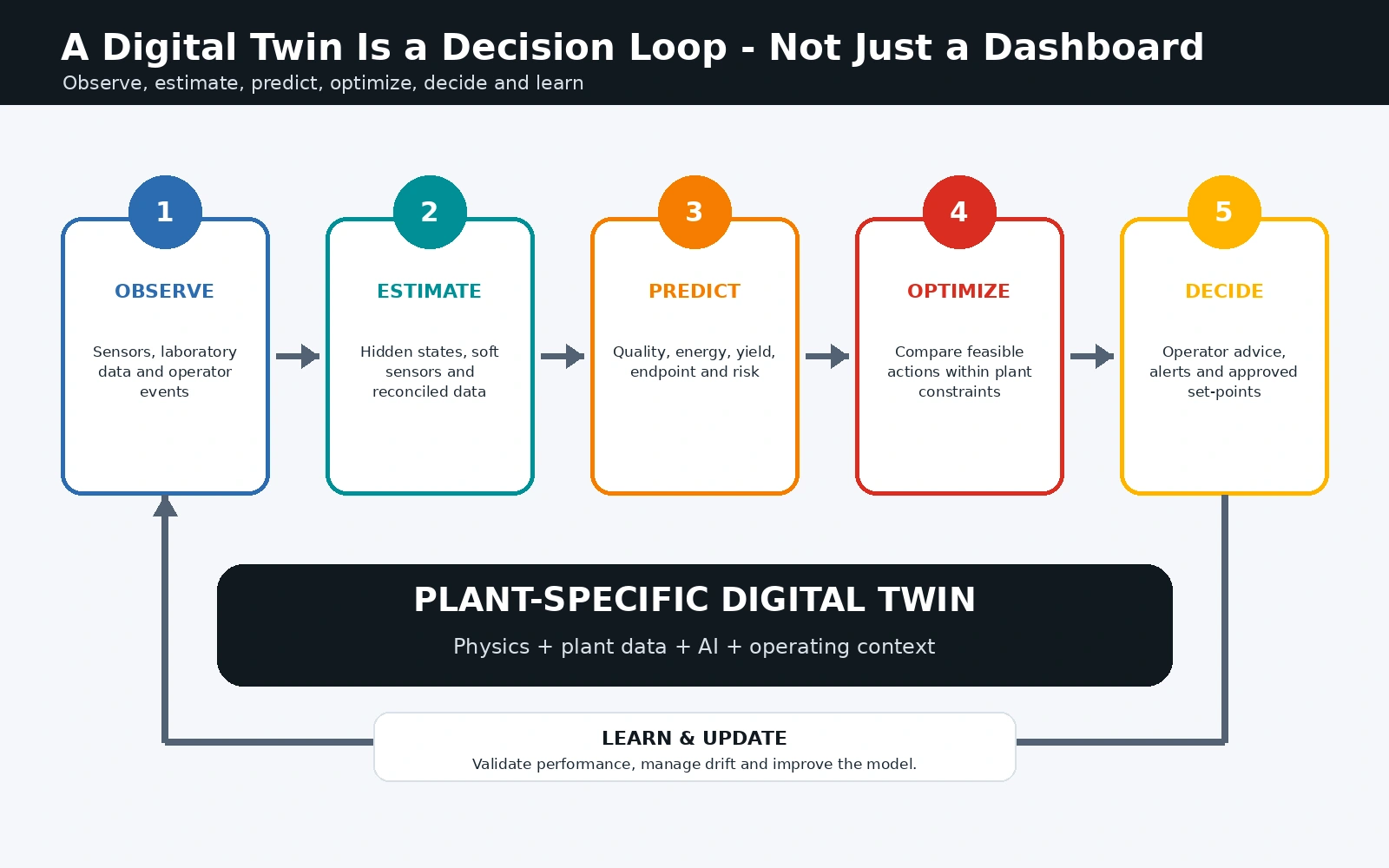
A dashboard displays measurements. A simulation calculates a scenario. A useful digital twin does more: it maintains a continuously updated representation of the process, reconciles measurements with engineering models, estimates hidden states, forecasts outcomes and compares actions within operating constraints.
International manufacturing standards such as the ISO 23247 series provide a reference framework for digital twins. In practical plant terms, the architecture can be understood as five connected layers: data, physics, state estimation, prediction and decisions.
The implementation may begin as an offline engineering tool, become a training or heat-replay simulator, develop into an operator-advisory application and, after rigorous validation and cybersecurity review, integrate with Level-II systems, historians, LIMS or plant automation. The deployment depth must match the problem, the data quality and the plant's risk-management requirements.
What outcomes should an industrial project target?
The objective is not to 'install AI'. The objective is to improve a measurable process decision.
Typical targets include tighter endpoint temperature and chemistry, lower specific energy or fuel consumption, improved metallic yield and alloy recovery, reduced reblows or rework, shorter treatment and tap-to-tap time, more stable slag practice, better gas utilization, earlier abnormal-condition detection, reduced defect risk, stronger operator consistency and more reliable emissions accounting.
Every project should begin with a baseline, an agreed KPI definition and a validation plan. Benefits should be demonstrated on unseen historical data and, where appropriate, through controlled plant trials. Recommendations should carry operating limits, uncertainty indicators and clear ownership.
From pilot to plant-wide intelligence
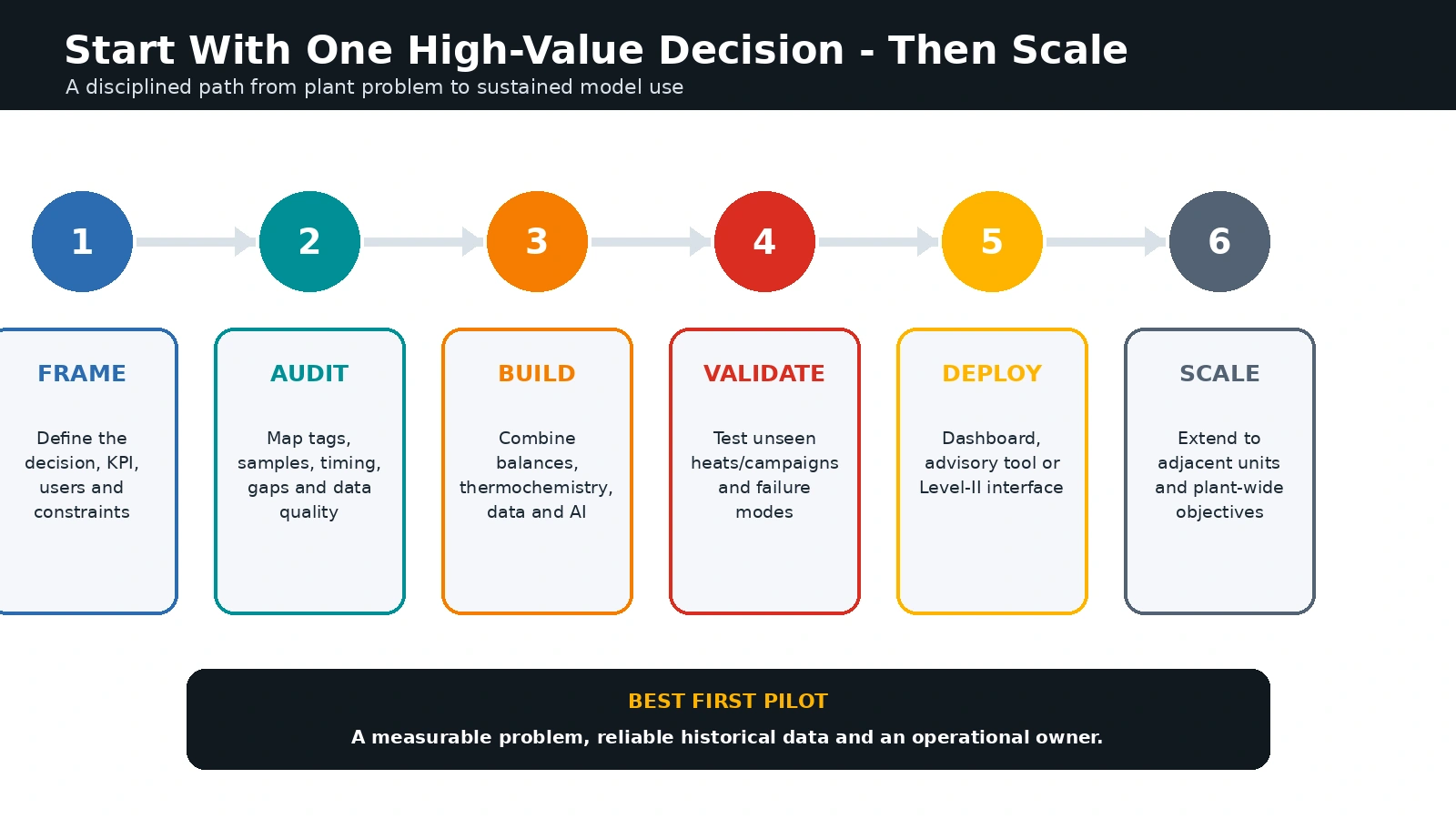
The fastest route is usually to start with one high-value decision rather than attempting a plant-wide transformation on day one.
First, frame the problem: decision, KPI, user, constraints and economic relevance. Second, audit the data: tags, laboratory timing, gaps, sensor quality and material information. Third, build the model using the right mix of balances, thermochemistry, statistics and machine learning. Fourth, calibrate and validate it across grades, campaigns and abnormal conditions. Fifth, deploy it in the form that fits the plant - offline tool, dashboard, advisory application or Level-II interface. Finally, monitor performance, manage versions and scale to adjacent units.
This approach reduces risk, builds operator confidence and creates a reusable architecture for future applications.
How ExtractMet approaches industrial AI and digital twins
ExtractMet Private Limited works at the intersection of extractive metallurgy, process intelligence and sustainability. Our approach begins with the plant problem - not with a generic software platform.
We combine first-principles process modelling, plant-data analysis, simulation, AI and machine learning, experimental studies and techno-economic evaluation. The objective is to develop transparent tools that can be calibrated to the furnace, raw materials, grades, operating practices and data environment of a specific site.
Our digital-twin portfolio spans blast furnaces, MIDREX and COREX ironmaking, BOF, EAF and induction-furnace steelmaking, secondary metallurgy, continuous casting, ferroalloy submerged-arc furnaces and plant-wide optimization. The SmartMelt platform provides a configurable foundation for time-resolved steelmaking simulation, operator training and plant-specific decision support.
For mining, mineral beneficiation and metal extraction, the same philosophy applies: use scientific models to structure the problem, use data to calibrate reality and use AI where it improves prediction, diagnosis or optimization.
The real competitive advantage: better decisions, heat after heat
The metals industry does not need AI for presentation. It needs intelligence that survives contact with the plant.
That means systems grounded in metallurgy, validated with real operating data, designed around human decisions and deployed with proper safety, cybersecurity and change management. When these elements come together, AI and digital twins can help organizations make process knowledge repeatable, scalable and continuously improvable.
The question is no longer whether metals production will become more data-driven. The strategic question is which plants will convert their data into dependable operating advantage first.
Explore ExtractMet solutions
About the author
Dr. Ajay Kumar Shukla is Founder and Director of ExtractMet Private Limited and Professor in the Department of Metallurgical and Materials Engineering at the Indian Institute of Technology Madras. His work spans iron and steelmaking, process metallurgy, industrial modelling, process control and sustainable metals production.
Suggested Medium tags
Artificial Intelligence · Steel Industry · Mining · Digital Twins · Process Control