
Steelmaking Process Control Is Entering Its Digital Twin Era
How plant-specific models, validated process data and operator-focused advisory tools can reduce variability, energy loss and quality risk in modern steel plants.
Explore ExtractMet's steelmaking process-control and digital-twin capabilities
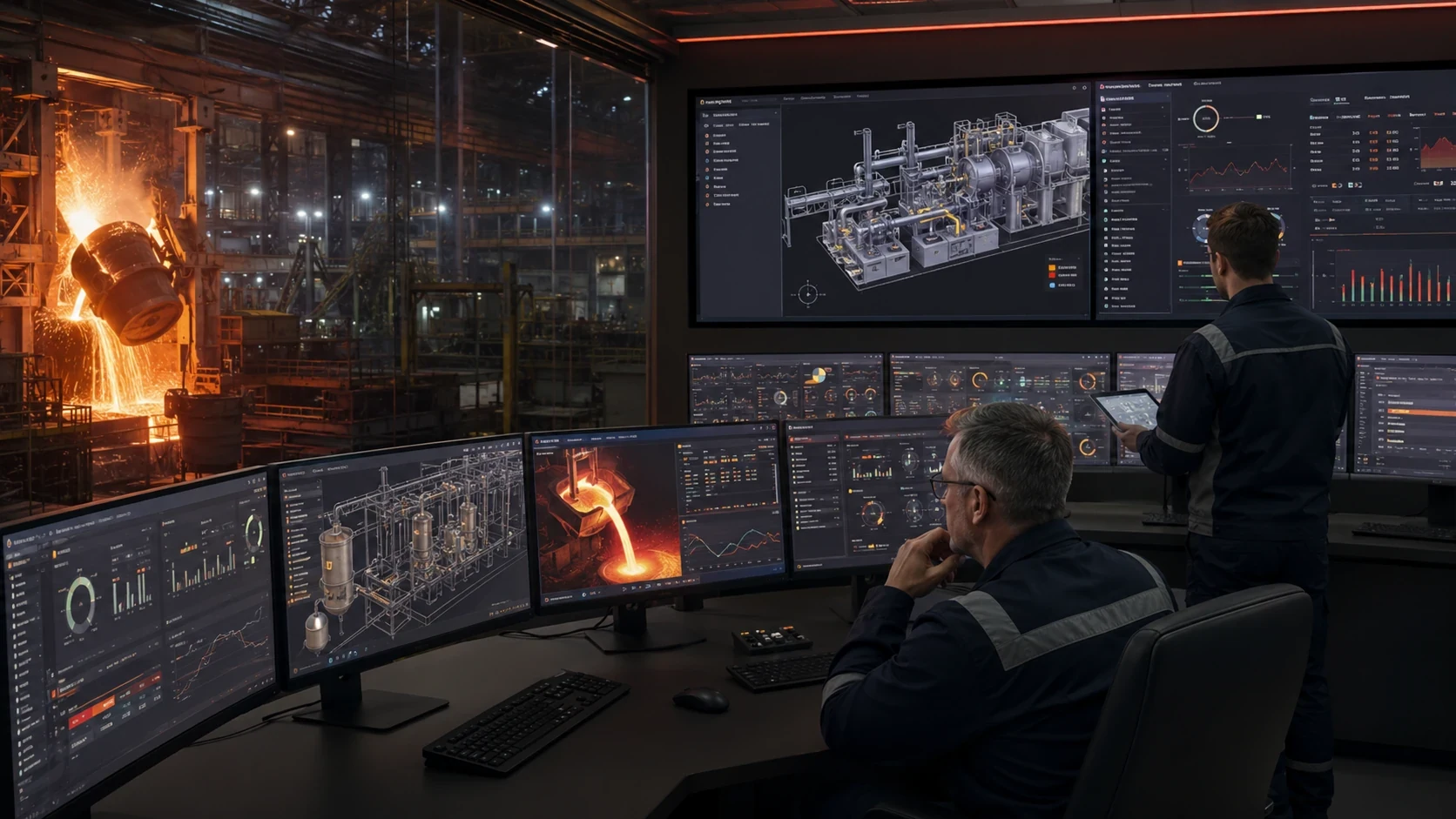
The steel plant problem: the process is visible, but the true state is often hidden
A steel plant produces large volumes of data every minute: temperatures, oxygen flow, power demand, charge weights, additions, slag chemistry, off-gas behaviour, laboratory samples, tap-to-tap time, caster speed, quality results and event logs. Yet the most valuable operating variables are often not measured directly.
What is the real liquid metal temperature before tapping? How much unmelted scrap or DRI remains in the furnace? How close is the BOF bath to endpoint carbon and temperature? Is the ladle slag still capable of refining? Is the caster approaching a quality-risk window? Which operating change will reduce energy without increasing rework?
These are not only data questions. They are metallurgical control questions. They require the combination of plant data, heat and mass balance, reaction logic, thermodynamics, kinetics, shop-floor timing and practical operating constraints.
That is where a plant-specific digital twin becomes commercially useful.
A dashboard is not a digital twin
Many plants already have historian trends, automation screens and dashboards. These systems are useful, but they usually show what has been measured. A digital twin should go further: it should estimate the hidden process state, predict what will happen next and compare possible operating decisions before the plant takes action.
For steelmaking, this means the twin must calculate. It must account for charge materials, metallic yield, oxygen and carbon reactions, slag formation, heat losses, alloy recovery, refining potential, off-gas chemistry, treatment time, superheat and quality constraints. A useful twin is therefore not simply a beautiful display; it is a validated engineering model connected to plant reality.
View ExtractMet's digital-twin portfolio
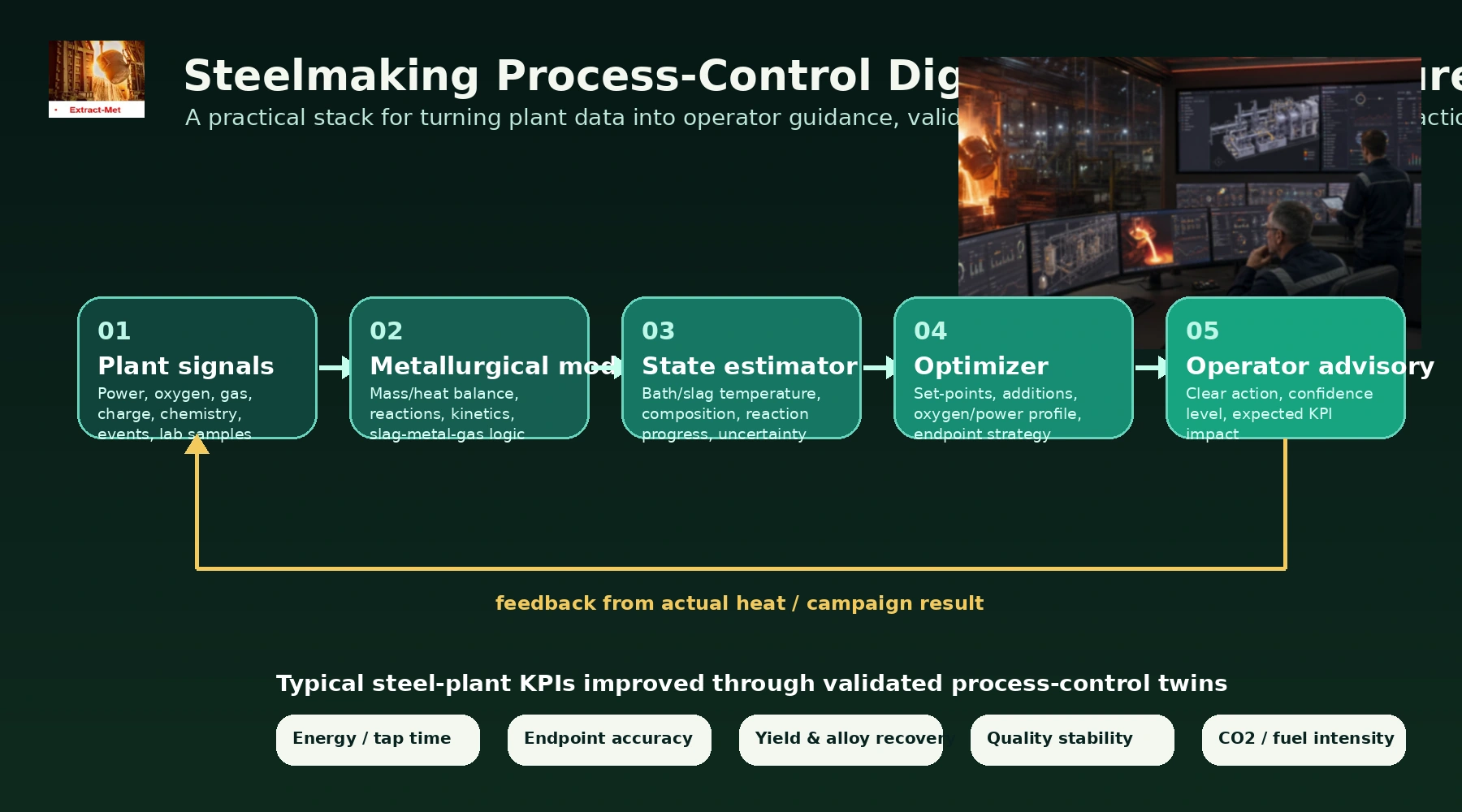
Where digital twins create value in steelmaking
The strongest starting points are process decisions that are repeated frequently, expensive when wrong and measurable through plant KPIs. In steelmaking, these often include endpoint prediction, energy optimization, charge-mix decisions, slag practice, alloy addition strategy, secondary-metallurgy treatment, casting stability and plant-wide decarbonization planning.
For an electric arc furnace, a dynamic model can connect scrap and DRI melting, electrical energy, oxygen injection, burners, carbon additions, slag foaming, bath chemistry, slag chemistry and tap temperature. This helps teams study charge mix, power profile, oxygen practice, tap-to-tap time, energy intensity and yield.
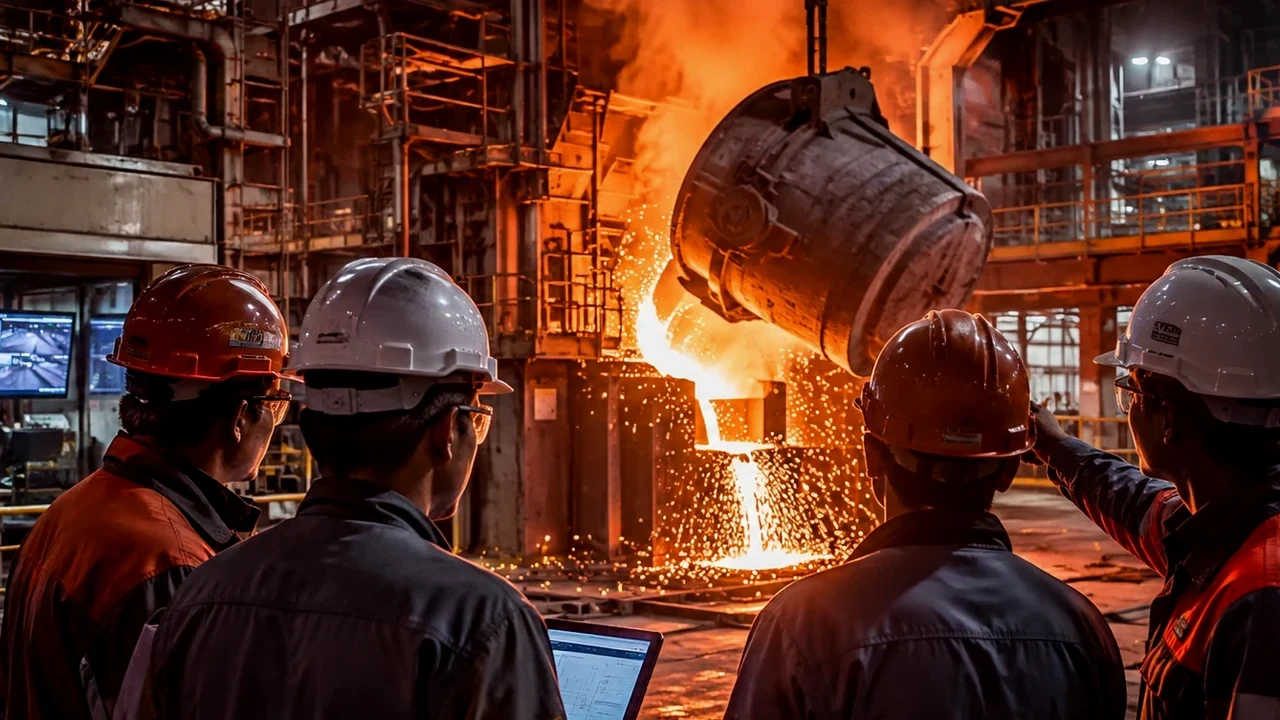
For a basic oxygen furnace, the priority is often endpoint control. A BOF twin can link hot-metal chemistry, scrap melting, oxygen blowing, flux dissolution, slag formation, decarburization, post-combustion, bath temperature and slag-metal-gas reactions. The benefit is not only better endpoint prediction; it is a more defensible oxygen, flux and correction strategy.
For secondary metallurgy, the challenge shifts to temperature control, composition trimming, clean-steel practice and treatment-time reliability. Ladle furnace, RH, VAD or related process twins can estimate temperature evolution, alloy recovery, slag refining capacity, stirring response, hydrogen or nitrogen removal and endpoint readiness.
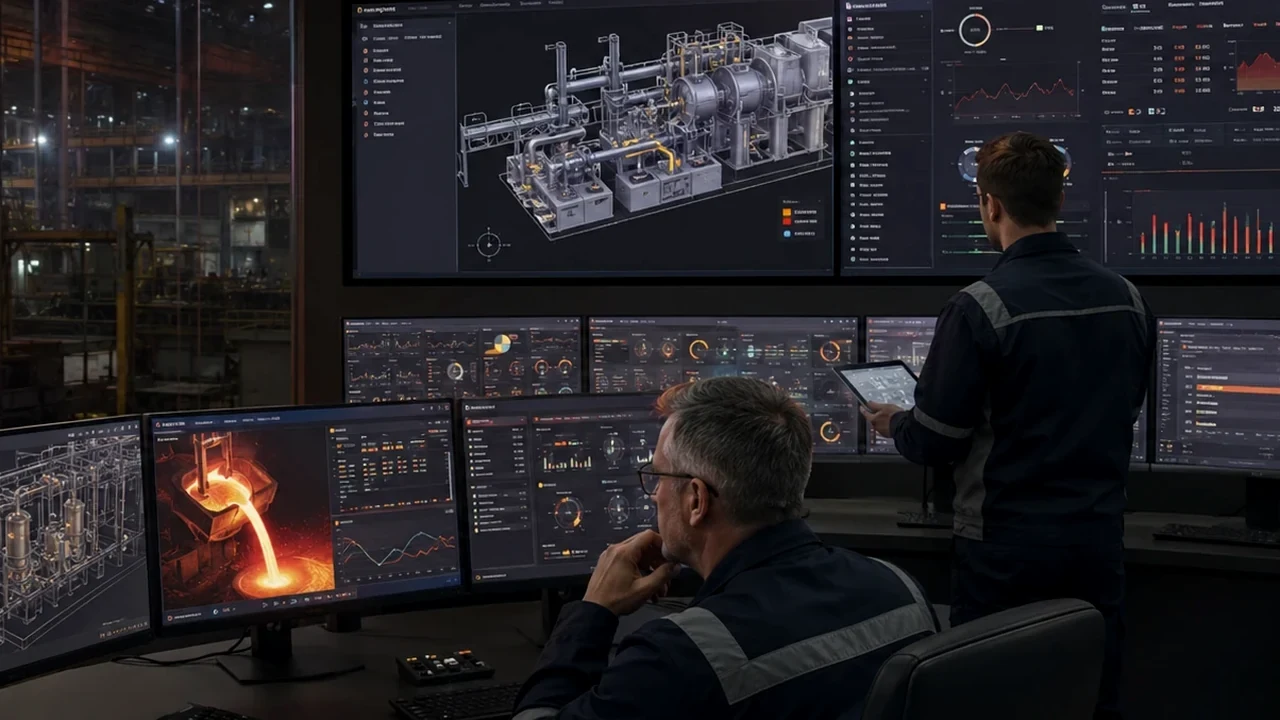
For continuous casting, the digital twin should connect ladle and tundish conditions, superheat, casting speed, mould heat transfer, secondary cooling, shell growth, solidification length and quality-risk indicators. This supports decisions on speed, cooling strategy, grade transition and breakout-risk reduction.
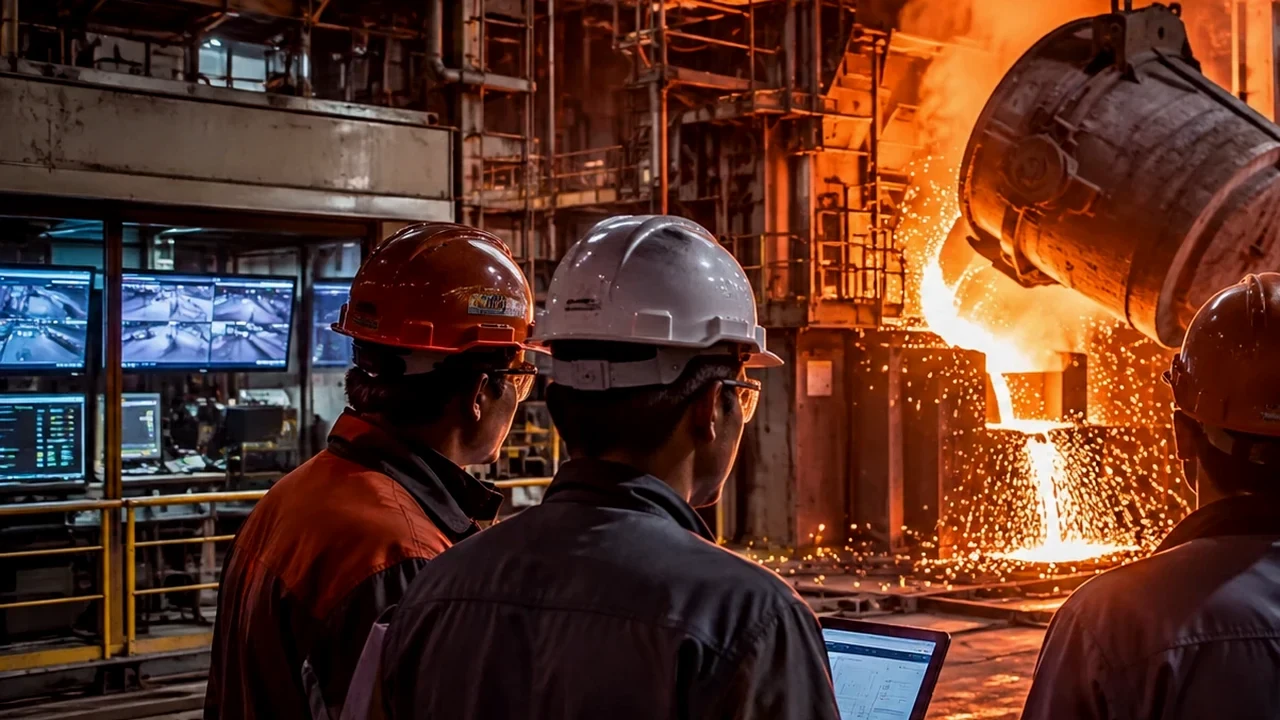
The control opportunity is not only automation; it is better decision quality
A common mistake is to treat digital transformation as a software procurement exercise. In steelmaking, the biggest gains often come from improving the quality of decisions before full automation is attempted. A good process-control solution helps plant teams answer practical questions such as:
- Which input variables are really controlling the current deviation?
- Which chemistry, temperature or slag state is likely at this moment?
- What will happen if oxygen, power, carbon, flux or alloy strategy is changed?
- Which operator action will improve the KPI without creating a new risk?
- How confident is the recommendation, and what data is missing?
This is why ExtractMet's approach begins with the plant problem rather than with a generic software template. The solution can be an offline engineering model, a training simulator, a heat-replay tool, an operator advisory dashboard, a Level-II integration concept or a plant-wide optimization model.
Explore SmartMelt for dynamic steelmaking modelling
The best pilot is focused, measurable and close to value
A digital-twin programme does not need to begin with a large, expensive transformation project. In many plants, the best starting point is one high-value use case with historical data and a measurable KPI.
Examples include reducing EAF energy per ton, improving BOF endpoint hit rate, stabilizing ladle temperature loss, improving alloy recovery, reducing casting quality deviations, assessing DRI or hydrogen integration, or connecting unit-process models into a plant-wide cost and emissions view.
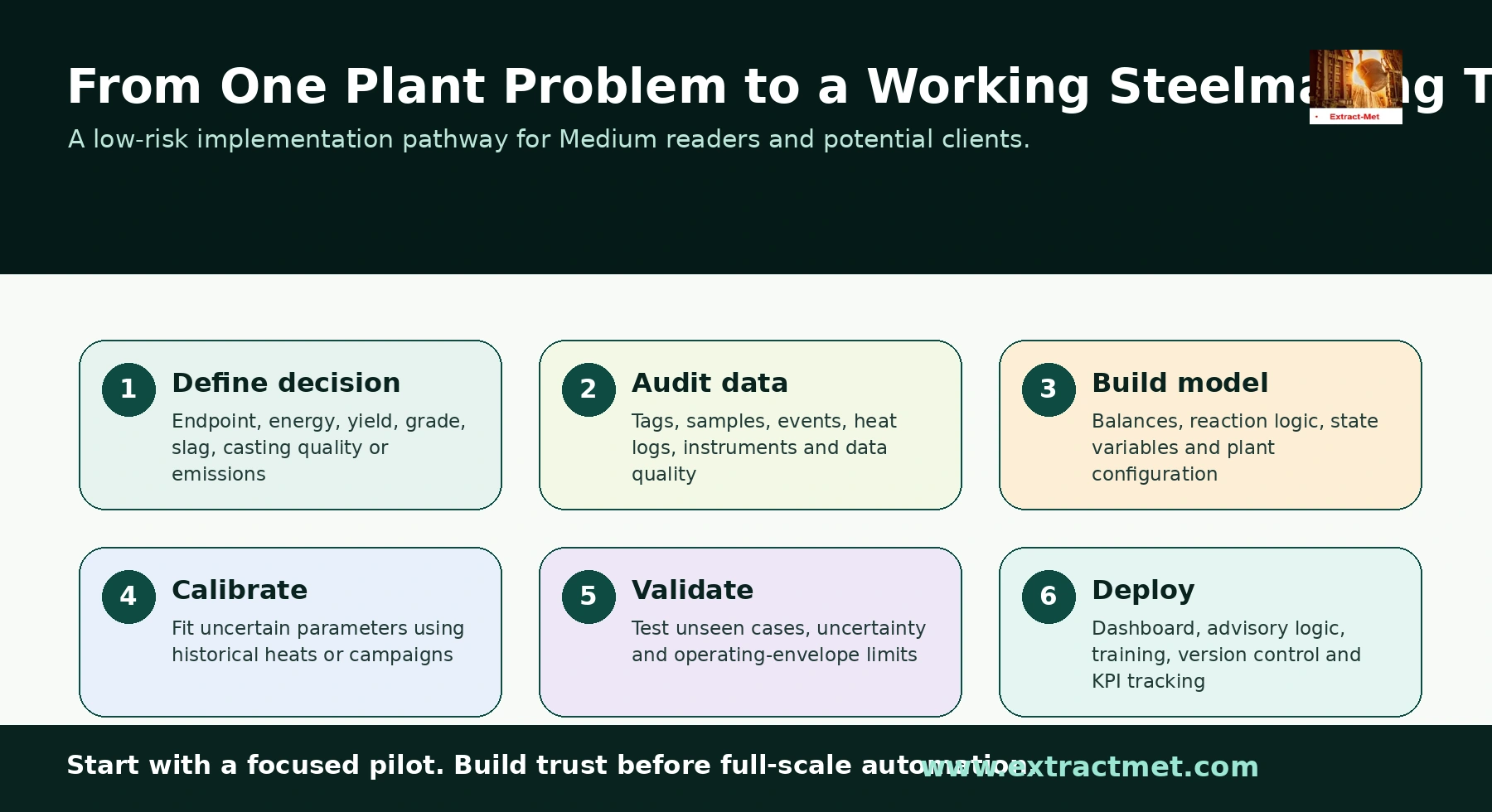
The pilot should define the decision, collect the right data, build the calculation model, calibrate it against representative heats, validate it on unseen cases and convert it into a format that operators or engineers can use.
Why metallurgy must remain at the centre
AI and machine learning have important roles in process control, especially for pattern recognition, fast prediction, soft sensors and anomaly detection. However, steelmaking data is noisy, operating windows change, sensors drift, laboratory timing is imperfect and unusual events can dominate performance. A purely data-driven model can fail outside its training envelope.
Plant-ready twins should therefore combine data-driven methods with metallurgical constraints. Conservation of mass and energy, reaction feasibility, slag-metal equilibrium, gas-phase logic, material inventories and operating sequence should be part of the calculation structure. This makes the model easier to validate, easier to explain and safer to use in production decision support.
Open ExtractMet's model catalogue
Process-control solutions can support decarbonization, not only productivity
Steelmakers are under pressure to reduce emissions while maintaining productivity, quality and cost competitiveness. Digital twins can help test hydrogen use, DRI charging, scrap strategy, oxygen and fuel optimization, waste-heat recovery, slag practice, yield improvement, and route-selection scenarios before capital is committed.
At plant level, the digital twin can connect unit processes with energy, gas networks, material routing, carbon accounting and production planning. This allows decarbonization to become a practical operating and investment roadmap rather than a general aspiration.
How ExtractMet can help
ExtractMet Private Limited supports steel, metals and mining organizations through process optimization, advanced process control, mathematical modelling, digital twins, plant-data analysis, experimental validation, operator training and sustainability studies.
For steelmaking clients, the work can include EAF, BOF, induction furnace, DRI/MIDREX, COREX, blast furnace, ladle metallurgy, vacuum treatment, continuous casting, ferroalloy furnace and plant-wide optimization studies. The objective is practical: convert shop-floor data and metallurgical understanding into tools that help improve energy, yield, quality, productivity, emissions and confidence in operating decisions.
Open the online steel-plant model demo hub
Call to action
If your steel plant is facing variability in endpoint control, energy consumption, charge mix, slag practice, secondary refining, casting quality, DRI integration, emissions intensity or operator decision support, a focused digital-twin pilot may be the fastest practical starting point.
Bring ExtractMet one measurable steelmaking problem. We will help frame the decision, audit the data, build the plant-specific model, validate it against operating reality and convert it into a practical control or decision-support pathway.
Start the conversation: www.extractmet.com
---