By ExtractMet Private Limited
Induction-furnace steelmaking has become an important route for flexible, distributed steel production—particularly for mini mills, rerolling-linked steel shops, foundries and MSME producers that need a comparatively compact and responsive melting route.
In India, the opportunity is especially significant. Secondary steel plants, including MSMEs, accounted for about 47% of crude-steel capacity in FY25, according to India Brand Equity Foundation. That means improvements in the way smaller steel shops select charge materials, use electrical energy and control heat-to-heat variability can have consequences far beyond an individual furnace.
Source: https://www.ibef.org/industry/steel
But the induction furnace has a fundamental process-control challenge:
**The quality, cost and energy performance of a heat are strongly influenced by decisions made before and during melting—while many important internal furnace states are not measured continuously.**
An operator may know the furnace extremely well. Yet every heat can still be different because scrap chemistry changes, DRI quality varies, metallic yield shifts, power availability fluctuates, alloy recovery is uncertain, and temperature measurements arrive only at discrete moments.
This is precisely where a hybrid process-control system—combining first-principles metallurgical models with machine learning—can become a practical shop-floor decision tool.
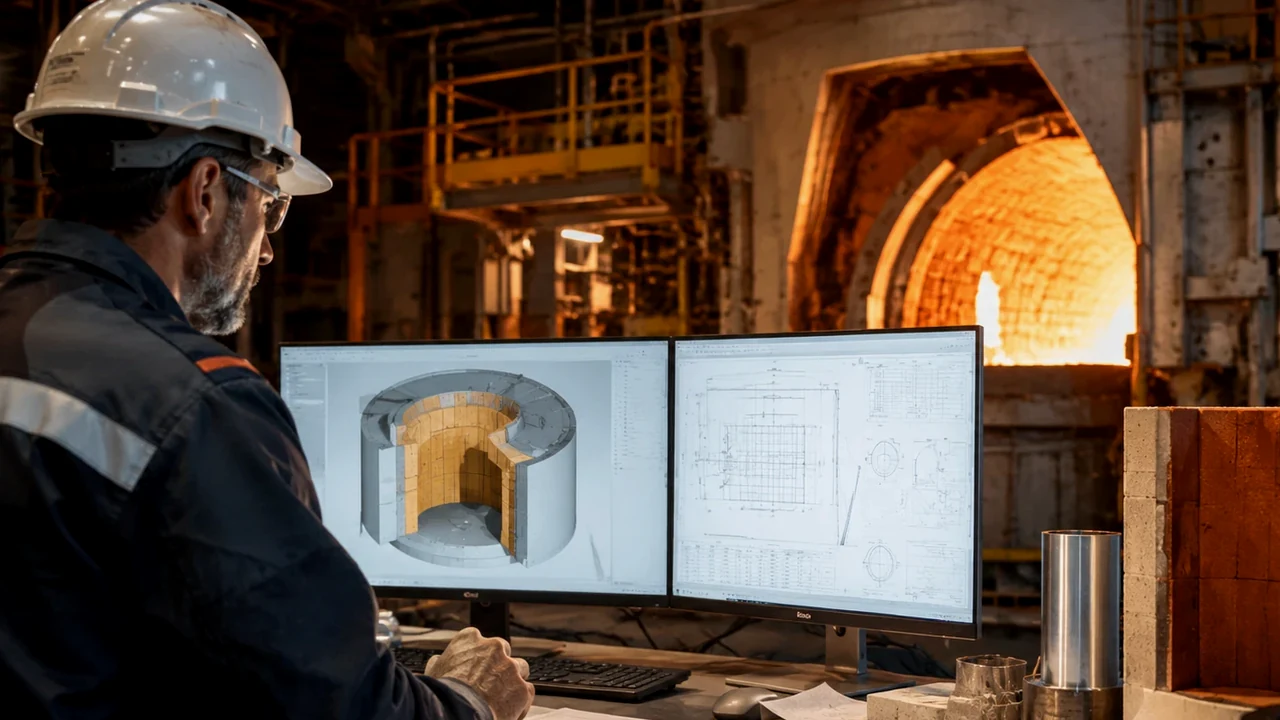
Figure 1. Induction-furnace steelmaking is a natural candidate for plant-specific digital decision support. Image: ExtractMet.
For an induction-furnace shop, two decisions dominate the economics and consistency of a heat.
The furnace may be fed with combinations of scrap classes, DRI/sponge iron, pig iron, internal returns, ferroalloys, carburizers and fluxes. The lowest purchase-price mix is not necessarily the lowest-cost heat.
A good charge must simultaneously respect:
The challenge is therefore an optimization problem under metallurgical constraints.
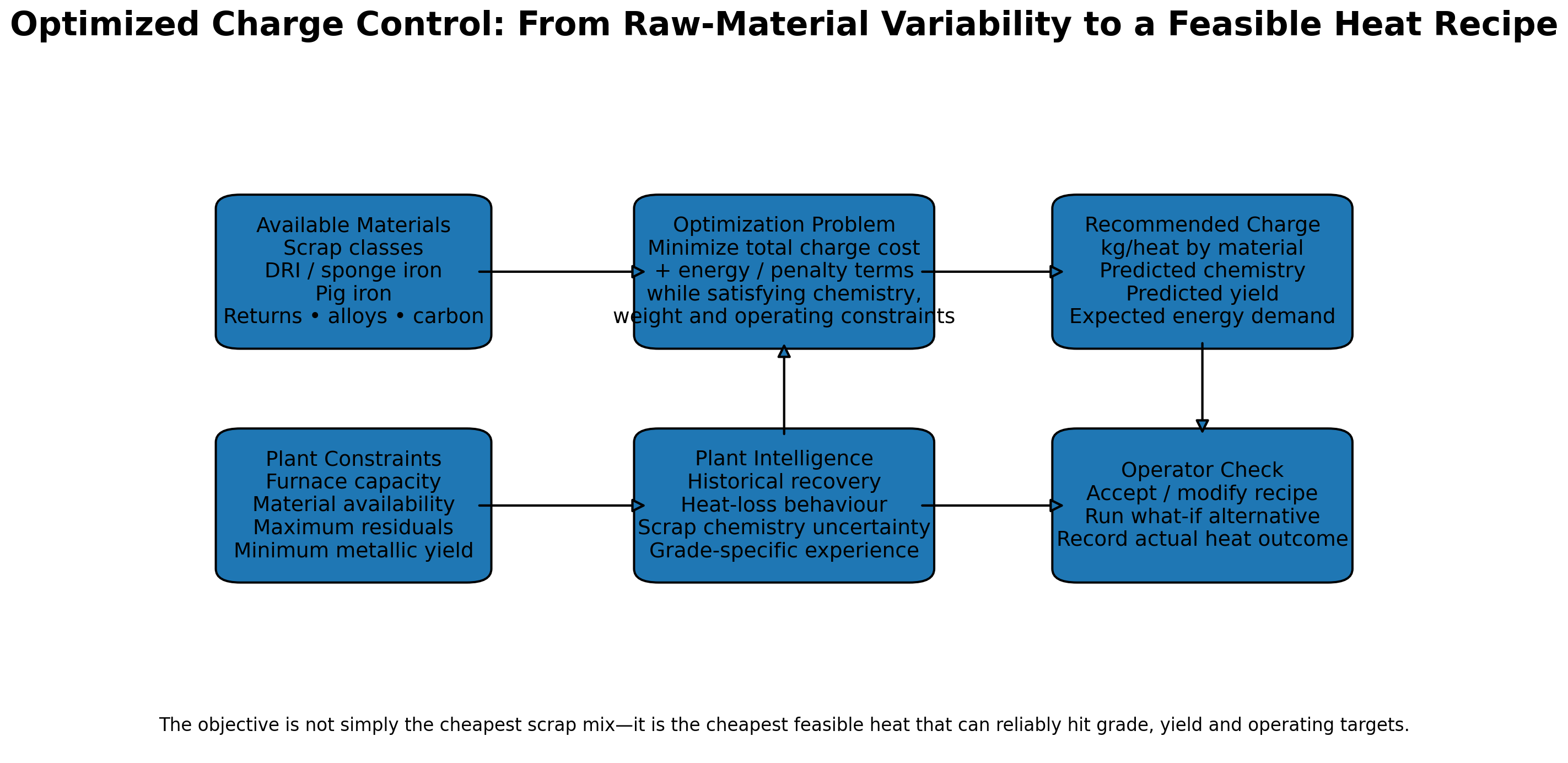
Figure 2. A charge optimizer converts raw-material choices, plant constraints and historical plant intelligence into a feasible heat recipe.
Even after a good charge has been selected, operators still need answers such as:
These are dynamic state-estimation and prediction questions.
They are difficult because the furnace is only partially observable. Temperature and chemistry are sampled intermittently, while the physical state evolves continuously.
A purely data-driven model can learn useful correlations, but steel shops often face a familiar problem: the data are imperfect.
Heat logs may contain missing tags. Scrap grades may be recorded differently by different shifts. Material chemistry can be uncertain. Some steel grades may have only a small number of historical heats. Operating practices may change after a refractory campaign, power-system modification or raw-material supplier change.
A first-principles model gives the system a metallurgical backbone:
Machine learning then helps where the physics is uncertain or plant-specific:
The result is not “AI replacing metallurgy.”
It is metallurgy constraining AI—and plant data improving metallurgy.
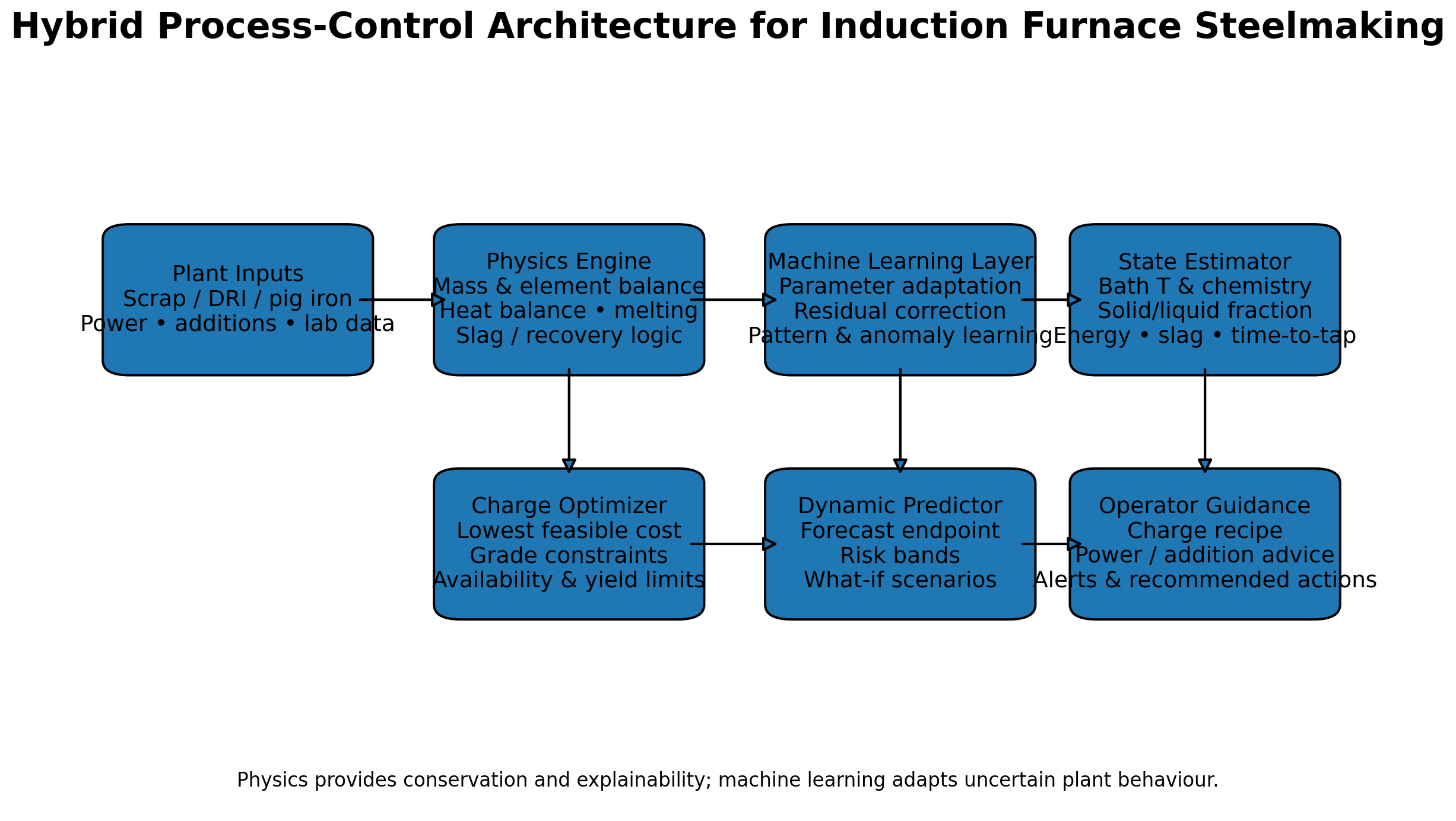
Figure 3. A practical hybrid architecture: physics handles conservation and process structure; machine learning adapts uncertain plant behaviour; optimization converts predictions into operator actions.
This philosophy is also consistent with ExtractMet’s broader digital-twin architecture, which begins with first-principles mass, elemental and heat balances and augments them with plant calibration, data reconciliation, soft sensors, statistical models and AI where they add value:
https://www.extractmet.com/digital-twins.html
Before a heat begins, the system can solve a constrained optimization problem for the required furnace charge.
A plant-specific objective function might minimize:
Total heat cost = raw-material cost + alloy cost + expected energy cost + yield-loss penalty + chemistry-risk penalty
subject to constraints such as:
The output can be presented in a form operators actually use:
“For the next grade, charge X kg of Scrap A, Y kg of Scrap B, Z kg of DRI, P kg of pig iron, and the following alloy additions.”
The recommendation can also show expected ranges—not just single-point values—for final chemistry, yield, energy requirement and cost.
That uncertainty band matters. Industrial decisions are rarely made with perfect input data.
The second layer follows the heat as it evolves.
Every time power is applied, material is charged, an alloy is added, slag is removed or a temperature sample is taken, the process model updates the internal state.
A useful operator display can estimate:
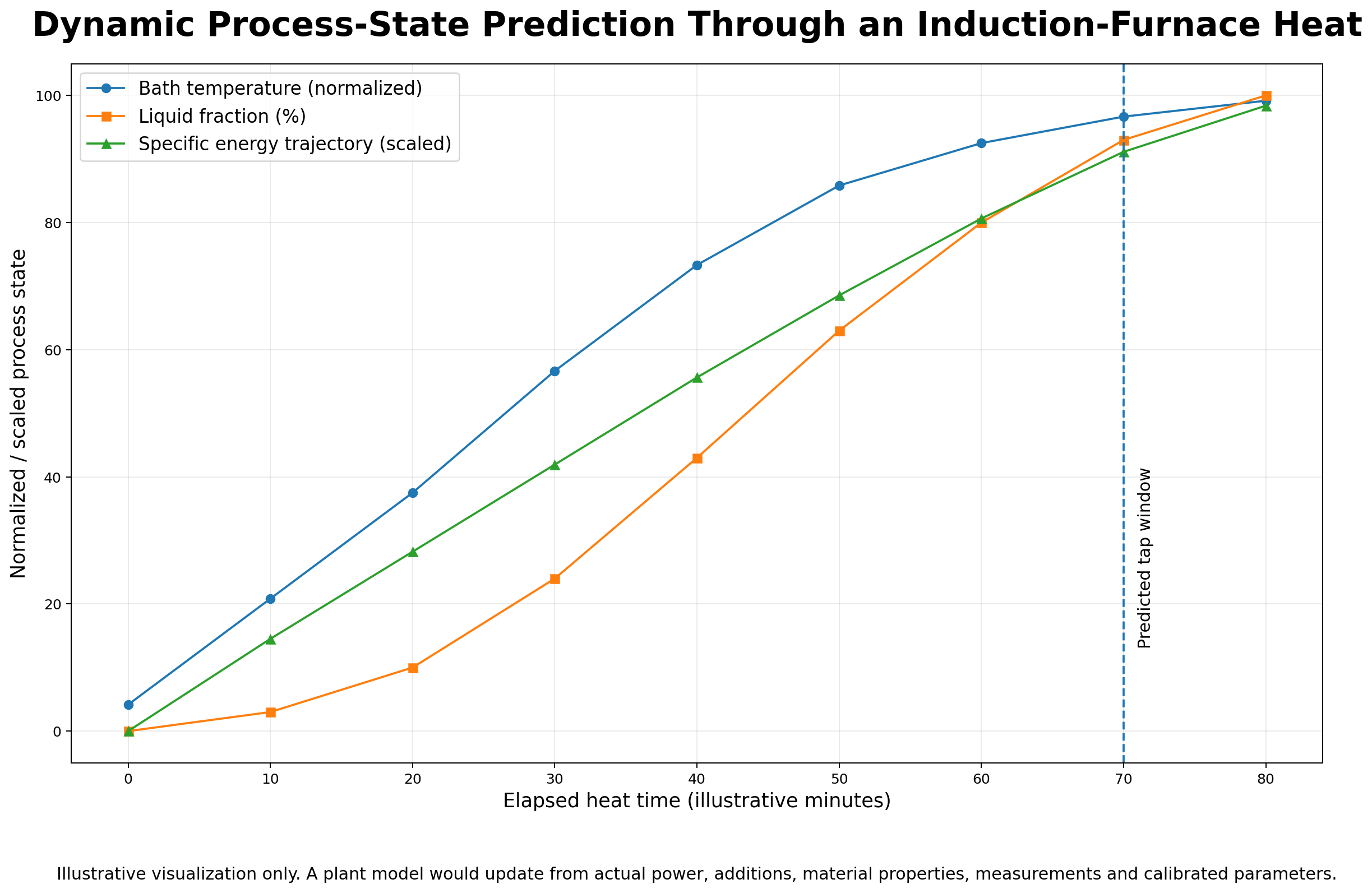
Figure 4. A dynamic model converts discrete operating events into a continuous estimate of the furnace state and predicted tapping window.
This is especially valuable because many of the variables operators care about cannot be measured continuously with a conventional sensor.
The model effectively becomes a soft sensor—an estimator based on process physics, live measurements and learned plant behaviour.
Energy is one of the largest controllable operating costs in induction melting.
The Bureau of Energy Efficiency’s induction-furnace performance guidance emphasizes the importance of measuring charged metal, energy consumed and specific energy consumption, and specifically notes the value of metering and control to pre-select the energy required for melting or holding so excess usage can be reduced.
Source: https://sidhiee.beeindia.gov.in/images/DigitalLibrary/637878645489151534.pdf
The important point for a process-control project is that energy should not be treated as a single final kWh/t number.
A dynamic model can ask:
There is evidence that data-driven analysis can reveal meaningful improvement opportunities. A 2024 induction-furnace study using time-series clustering and multi-criteria decision methods reported an 8.6% reduction in electricity costs when a best-practice melting pattern was applied in the studied foundry. That number should not be assumed for every plant, but it shows why heat-trajectory intelligence deserves attention.
Study: https://arxiv.org/abs/2401.04751
Large integrated plants can justify extensive Level-II automation programs, multiple specialist teams and large instrumentation budgets.
An MSME steel shop usually needs something different:
That makes the offline-model → operator-advisory → Level-II/digital-twin pathway particularly attractive.
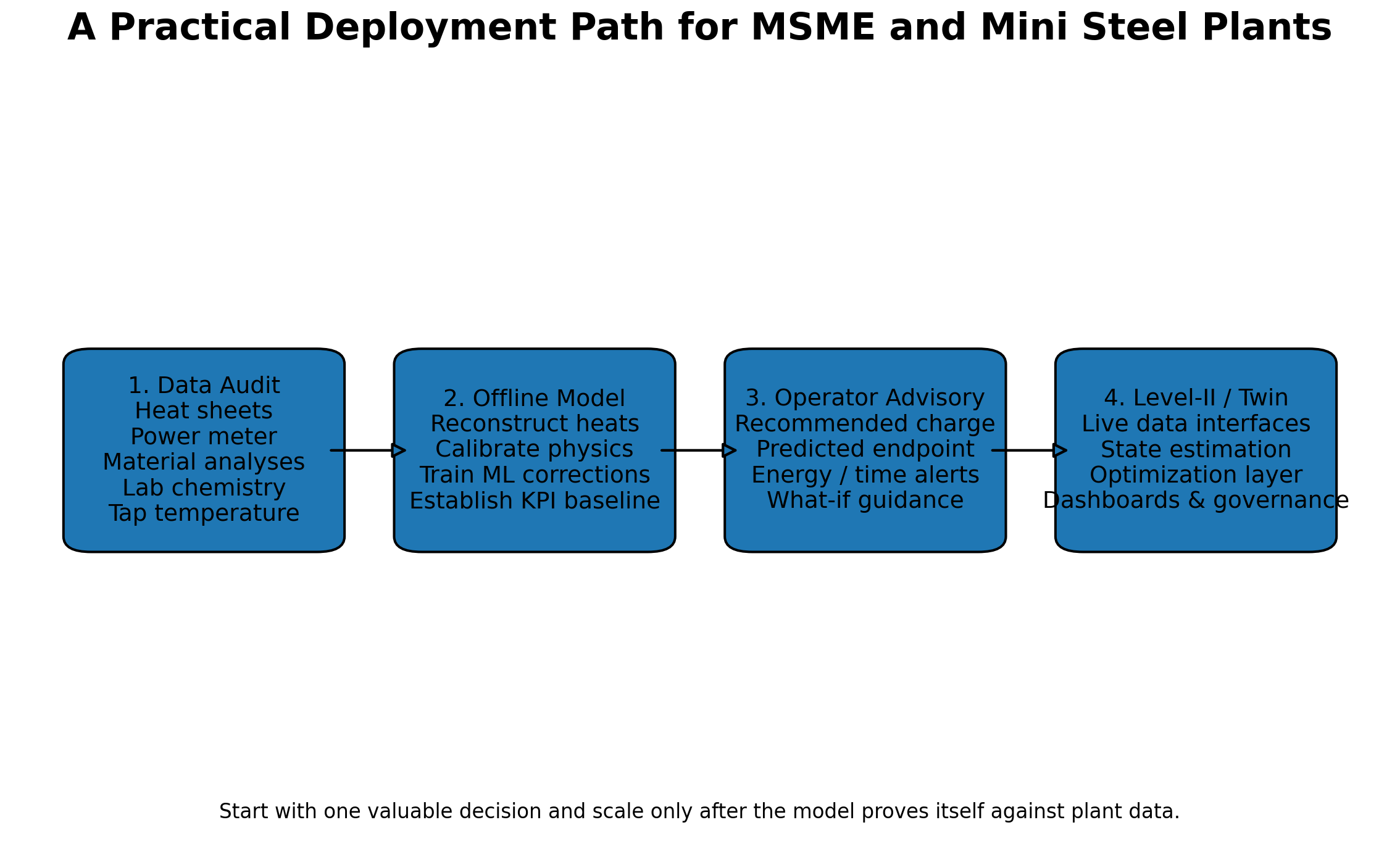
Figure 5. A phased route allows an MSME plant to prove value before committing to deeper automation.
A first pilot does not need to control the furnace automatically. It can begin by replaying historical heats and answering one economically important question.
For example:
**Can we reduce charge cost and heat-to-heat variability while still meeting grade chemistry, tapping temperature and production targets?**
If the model proves accurate on unseen heats, it can then be connected to live data and used as an advisory system.
ExtractMet’s current digital-twin portfolio includes a configurable induction-furnace steelmaking model focused on charge melting, electrical efficiency, bath homogenization, alloy and flux additions, yield and grade achievement. The model can track solid/liquid inventory, bath temperature and chemistry, slag quantity and chemistry, and energy/melting efficiency, while supporting charge sequencing, grade transition planning, alloy recovery, yield and tap-temperature/power strategy.
Explore the portfolio: https://www.extractmet.com/digital-twins.html
The broader SmartMelt platform is designed around time-step mass balances, elemental balances, heat balance, reaction networks and operator events, with plant-specific configuration for furnace size, charge practice, power profile, raw-material quality and steel grade.
SmartMelt: https://www.extractmet.com/smartmelt.html
A plant-specific induction-furnace project can therefore include:
Depending on plant readiness, the solution can operate from:
ExtractMet’s Model Demo Hub also illustrates the broader approach of combining physics, data, prediction and decision support across steelmaking processes:
https://www.extractmet.com/Models.html
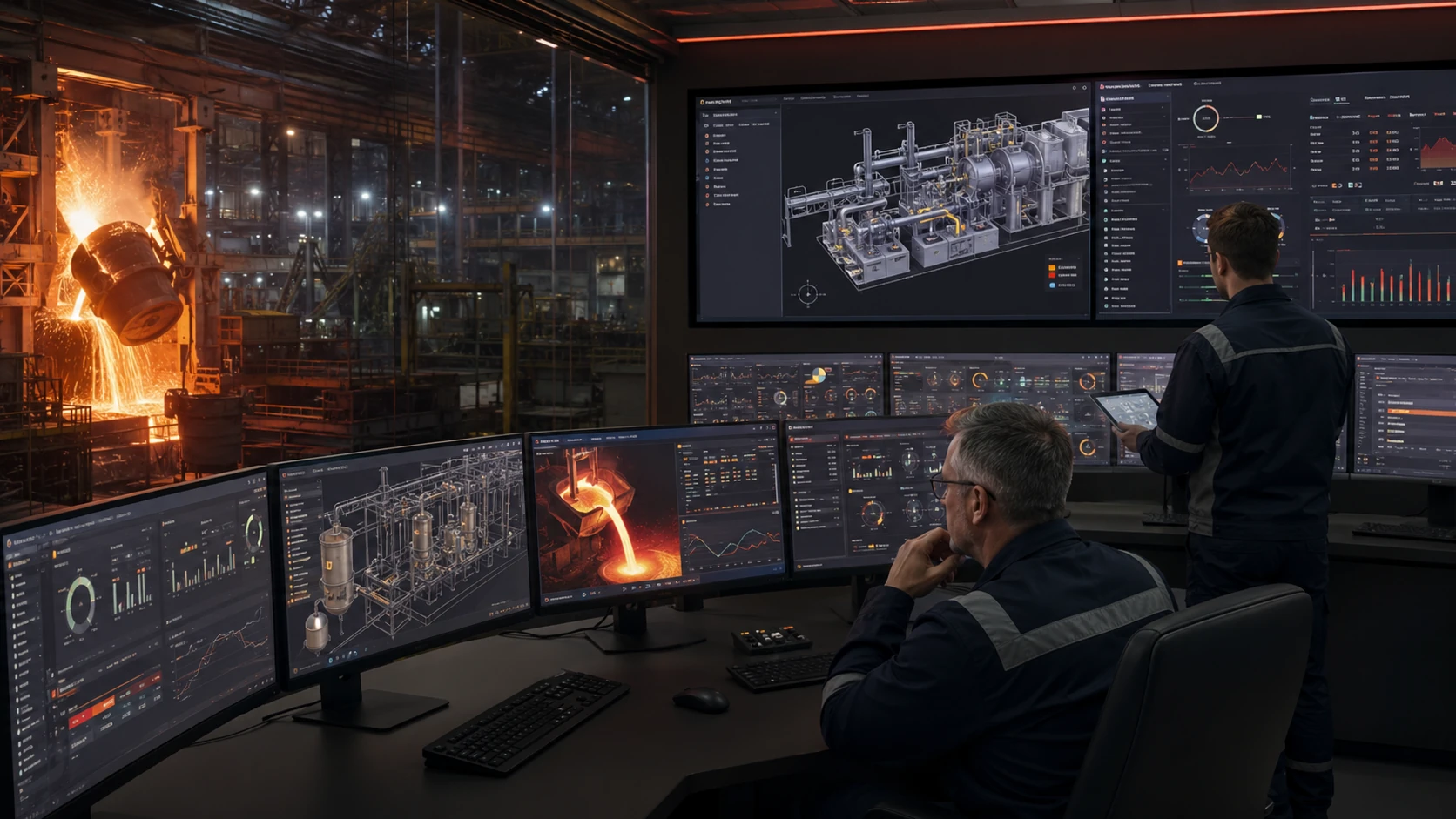
Figure 6. The goal is not another dashboard. It is a metallurgical decision layer that turns plant data into predictions and recommended actions. Image: ExtractMet.
For induction-furnace steelmaking, the fastest path to value is usually decision support before automatic control.
The system should explain:
This builds trust and creates a feedback loop between operator experience and the model.
Experienced operators remain an asset—not an obstacle—to digitalization. Their heat knowledge becomes part of the model-development process.
A practical pilot can be structured in five stages:
The objective should be measurable: lower charge cost, lower energy per tonne, tighter chemistry, improved yield, shorter cycle time, fewer corrective additions—or a carefully chosen combination.
The technology is already electrically driven, batch-based and rich in operating data.
The next step is to convert that data into a continuously updated metallurgical understanding of the heat.
A hybrid model can answer three questions at the heart of process control:
What should we charge?
What is happening now?
What should the operator do next?
For MSME and mini steel plants, that can be the difference between digitalization as a large IT project and digitalization as a practical production tool.
If your steel plant operates induction furnaces and you are looking to improve charge cost, chemistry consistency, energy performance, yield, melt time or operator guidance, ExtractMet can develop a plant-specific pilot around your furnace, raw materials, grades and available data.
Explore ExtractMet: https://www.extractmet.com
Digital-twin portfolio: https://www.extractmet.com/digital-twins.html
SmartMelt dynamic steelmaking platform: https://www.extractmet.com/smartmelt.html
Model Demo Hub: https://www.extractmet.com/Models.html
Discuss a project: https://www.extractmet.com/#contact
Steelmaking · Induction Furnace · Artificial Intelligence · Machine Learning · Digital Twin
induction furnace steelmaking, induction furnace process control, induction furnace charge optimization, steel charge mix optimization, dynamic steelmaking model, induction furnace digital twin, AI in steelmaking, machine learning steel plant, MSME steel plant automation, mini steel plant process optimization, specific energy consumption induction furnace, steelmaking operator guidance