A client-focused article for blast furnace, MIDREX, COREX/FINEX, and rotary-kiln DRI plants looking for lower fuel rate, stable quality, higher productivity, and data-driven operating discipline.
Visit ExtractMet | Discuss an ironmaking digital twin
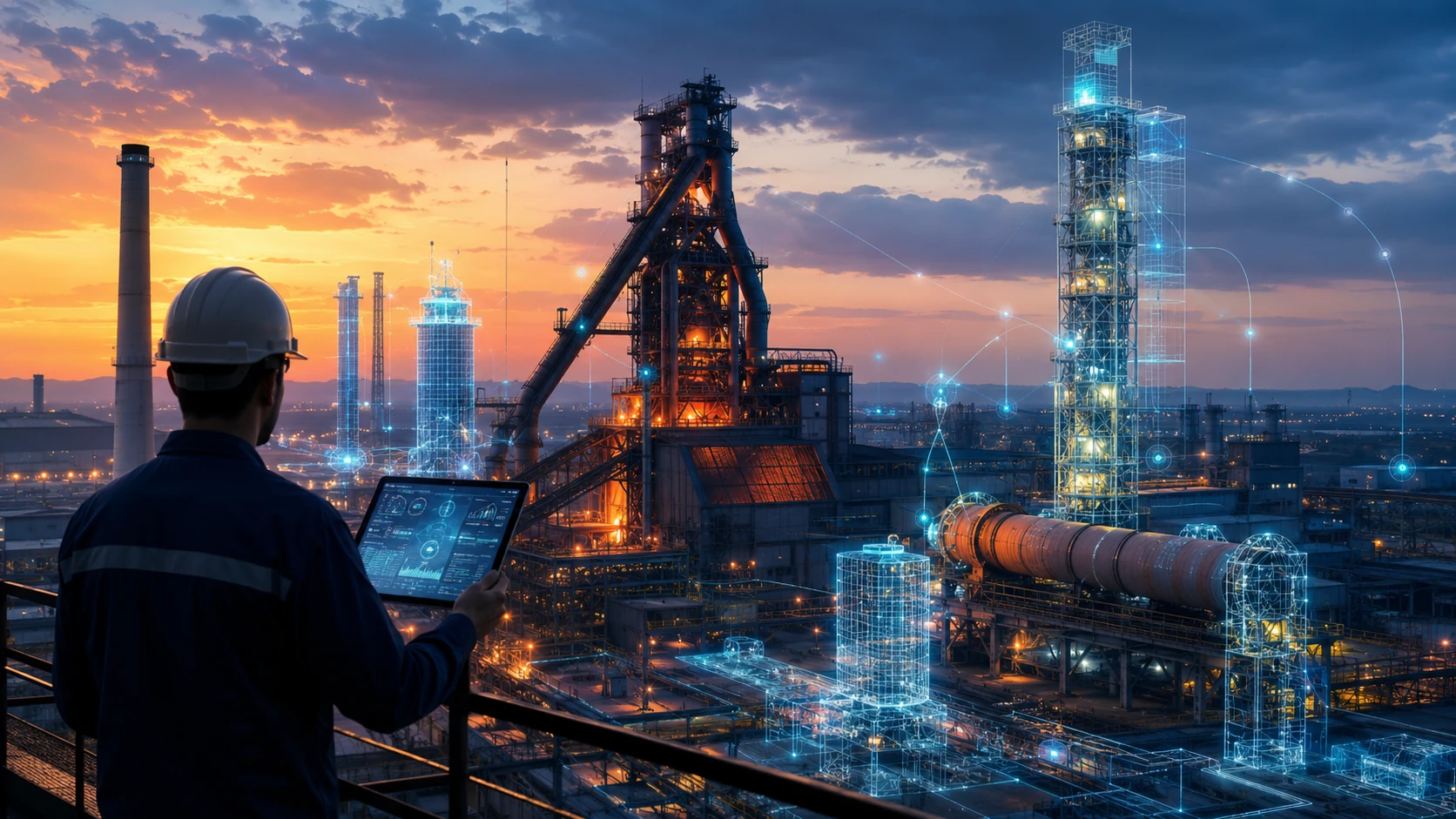
The operating challenge is no longer only metallurgical — it is informational
Ironmaking plants generate a massive stream of data, but plant teams often still depend on delayed samples, fragmented dashboards, and expert judgement under pressure. The result is a familiar pattern: operators know the plant is drifting, but they do not always know why, how fast, or which corrective action will have the highest payoff.
This challenge matters because steel remains one of the world’s largest industrial systems. Worldsteel reports that 1,886 Mt of crude steel was produced in 2024, and estimates that sector emissions were of the order of 4.1 billion tonnes CO2e, representing about 7–8% of global anthropogenic GHG emissions. IEA also identifies iron and steel as the largest heavy-industry source of direct CO2 emissions.
For producers, the message is direct: the next improvement step will come from a stronger operating layer — one that converts measurements, heat-and-mass balances, models, AI, and metallurgical expertise into real-time guidance.
What ExtractMet brings to ironmaking operations
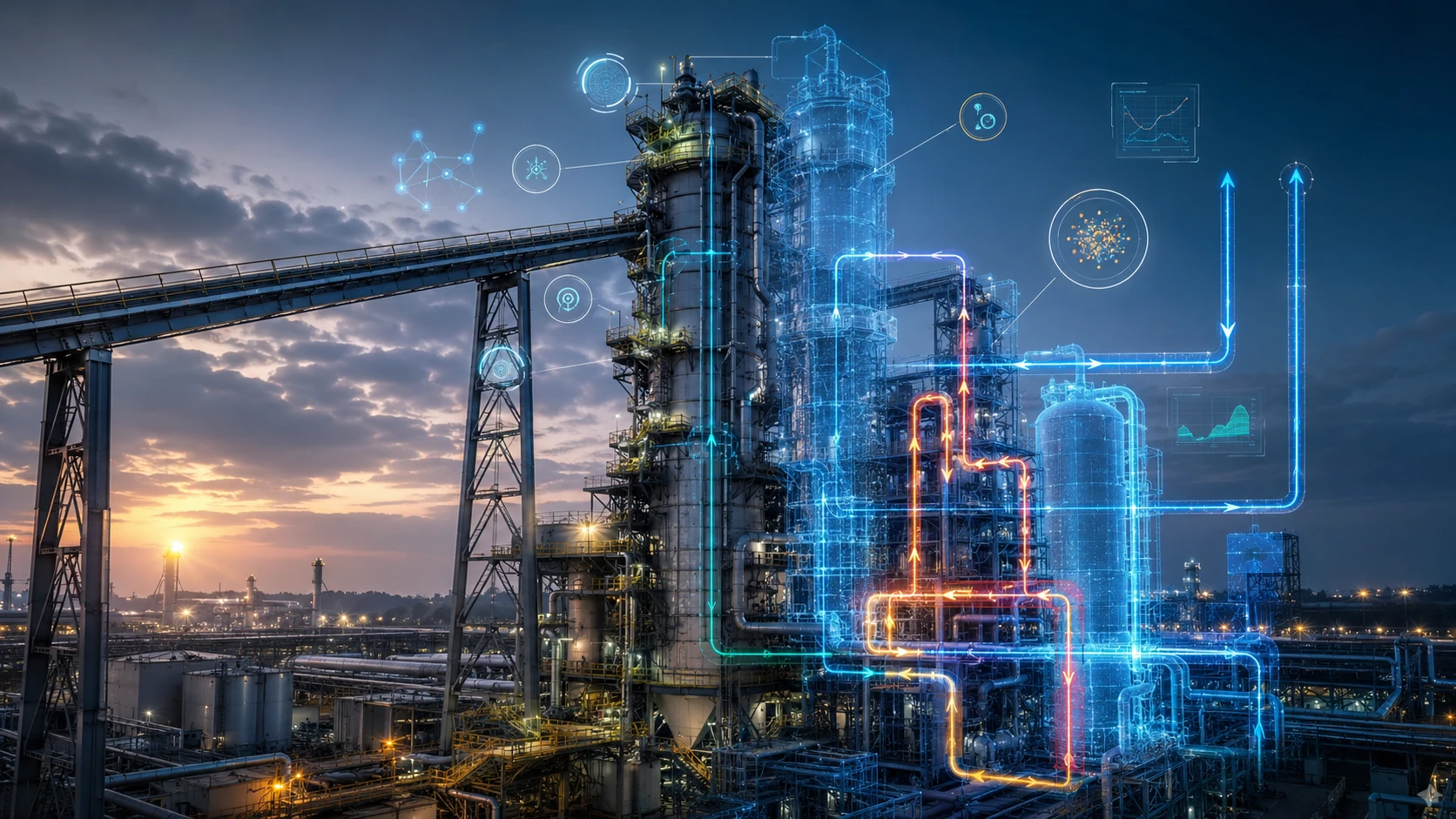
ExtractMet helps ironmaking companies build practical digital-twin-enabled process-control solutions that are designed around the plant’s route, raw materials, instrumentation, and operational constraints.
Our focus is not a cosmetic dashboard. The objective is to create a usable decision system that helps plant teams answer daily operational questions: Is the furnace thermal state drifting? Is gas utilization falling? Is the kiln approaching accretion risk? Is the shaft furnace heat balance consistent with product metallization? What happens if coal, coke, oxygen, gas composition, feed rate, burden chemistry, or temperature is changed?
Explore ExtractMet at https://www.extractmet.com and connect with us for a route-specific plant diagnostic.
Where digital twins create value in ironmaking
A useful ironmaking twin combines first-principles metallurgy with plant data. It should respect Fe/O/C/H mass balances, heat balance, gas-phase reactions, reduction kinetics, slag chemistry, pressure drop, energy flows, product quality, and the practical reality of missing or noisy sensors.
For blast furnaces, the twin can support thermal-state estimation, coke-rate/fuel-rate optimization, burden and gas distribution assessment, top-gas analytics, hot-metal quality prediction, and operator advisory logic. For MIDREX and other shaft furnaces, it can track reduction efficiency, gas utilization, heat balance, reformer and bustle-gas impacts, DRI metallization, carbon, and product temperature. For COREX/FINEX, it can connect the shaft/reduction stage with the melter-gasifier and export-gas quality. For rotary-kiln DRI, it can detect accretion risk, optimize coal and air distribution, predict metallization, and stabilize kiln temperature profiles.
Midrex reported 135.7 Mt of global DRI production in 2023, with India’s rotary kilns and gas-based shaft furnaces contributing materially to the increase. That growth makes advanced control particularly important for plants that must compete on yield, fuel use, emissions intensity, and product consistency.
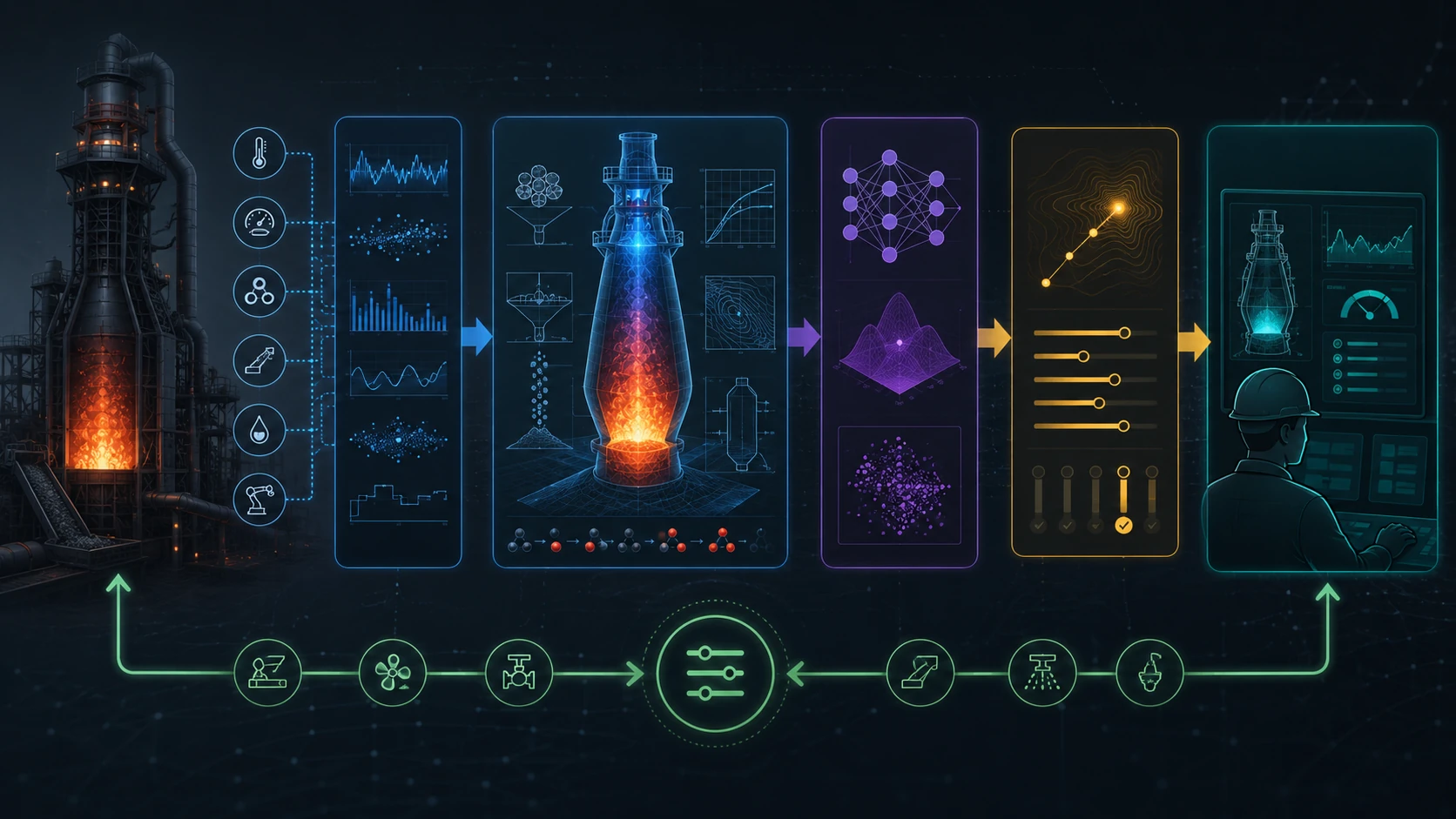
The solution architecture: from data to decisions
An ExtractMet-style solution can be deployed in layers. The first layer cleans and reconciles plant data from PLC, SCADA, historian, laboratory, weighbridge, gas analysis, shell temperature, pressure, and quality systems. The second layer builds a route-specific heat, material, gas, and elemental balance. The third layer adds soft sensors and AI models for variables that cannot be measured continuously. The fourth layer converts predictions into recommended set-points, operating envelopes, alerts, and what-if simulations.
The highest value comes when the system is built with plant teams, not around them. Operators should be able to see why a recommendation is made, which constraint is active, and what operational risk is being reduced.
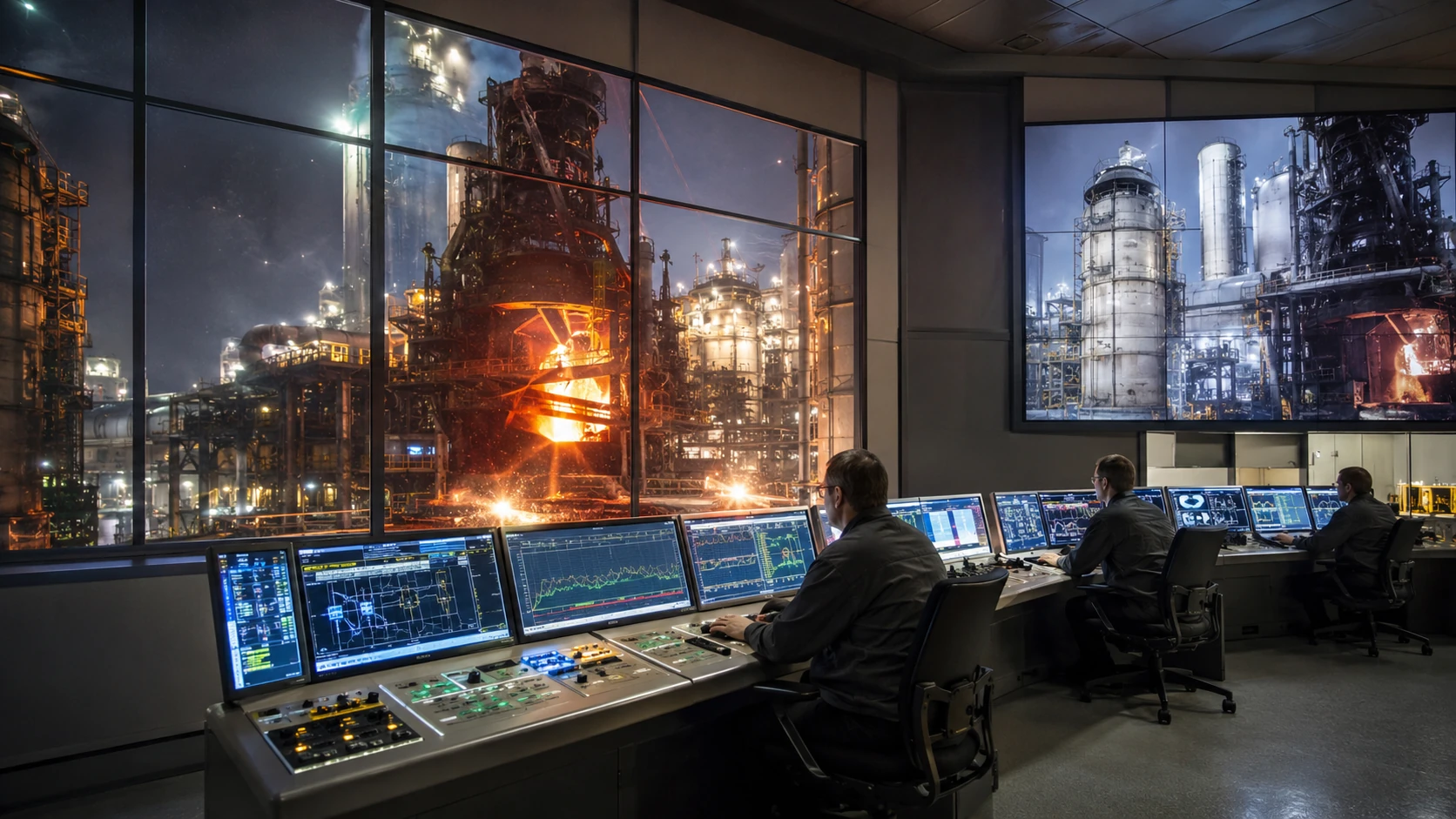
Plant-route examples
Blast Furnace: Online thermal index, hot-metal silicon and temperature prediction, gas utilization diagnostics, cohesive-zone and burden-distribution indicators, fuel-injection optimization, and alarm rationalization.
MIDREX / Shaft Furnace DRI: Gas composition and utilization twin, shaft heat balance, reformer/bustle-gas advisory, metallization and carbon prediction, oxygen addition and natural-gas reforming impact, and hydrogen-ready operating studies.
COREX / FINEX: Linked reduction-stage and melter-gasifier balance, export-gas quality prediction, oxygen/coal control advisory, hot-metal quality forecasting, and bottleneck analysis.
Rotary Kiln DRI: Kiln temperature-profile twin, accretion early warning, coal and air split optimization, feed-rate advisory, product metallization and carbon soft sensors, and kiln stability dashboard.
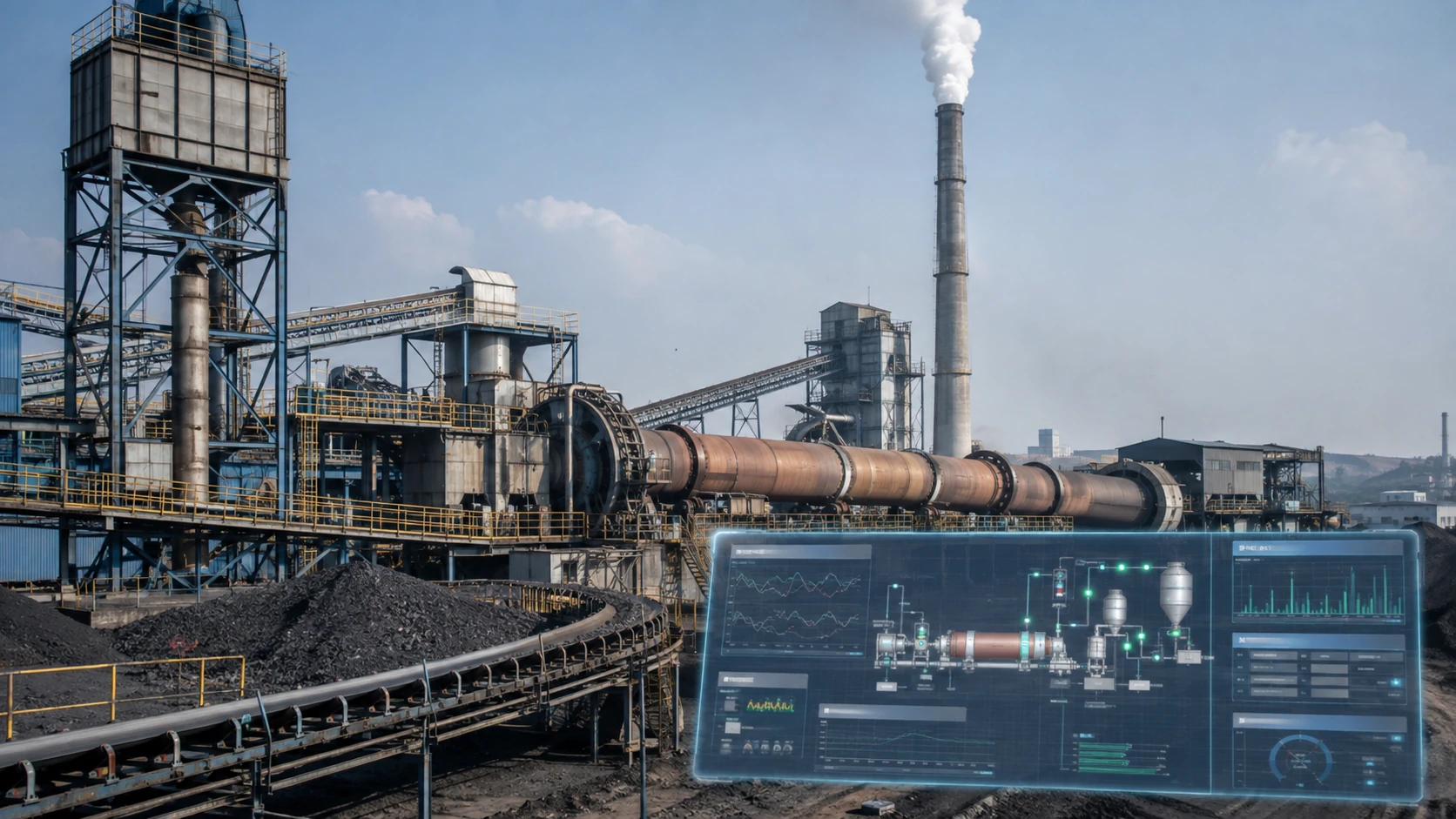
A practical engagement model
Phase 1 — Opportunity Diagnostic: Review plant data, instrumentation, operating pain points, and KPIs. Identify the best first-use case: fuel rate, productivity, quality, accretion, gas utilization, yield, emissions, or downtime.
Phase 2 — Model Build and Validation: Develop route-specific heat/material/gas balances, soft sensors, and AI models. Validate against historical heats, campaigns, shifts, and laboratory results.
Phase 3 — Pilot Advisory Deployment: Deploy a non-invasive operator-advisory layer. Run shadow-mode recommendations, compare against current practice, and quantify savings opportunities.
Phase 4 — Closed-Loop or Semi-Closed-Loop Control: Integrate with Level 2/Level 3 systems where appropriate, with operator approval, safety interlocks, and change-management discipline.
What industries and plant leaders can expect
The most immediate benefits are usually improved stability, faster diagnosis, better quality forecasting, lower avoidable fuel and energy losses, reduced operator-to-operator variability, and stronger planning for decarbonization. The system also becomes a knowledge-retention layer: it captures expert metallurgical reasoning and makes it available to new operators and plant engineers.
This is especially valuable for plants dealing with variable ore, coal, pellet, lump ore, gas composition, hydrogen blending, high ash coal, changing coke quality, strict emissions targets, or frequent campaign instability.
Why now
Ironmaking is moving into a period where competitiveness will depend on both metallurgical excellence and digital execution. Plants that act early can build a data foundation for lower emissions, higher asset productivity, and faster troubleshooting. Plants that wait may find themselves with more sensors, more dashboards, and still no trusted decision layer.
ExtractMet works at the intersection of process metallurgy, mathematical modelling, process control, and digital twins. If you operate or advise a blast furnace, MIDREX/HYL-type shaft furnace, COREX/FINEX plant, rotary kiln DRI unit, or an integrated ironmaking-steelmaking route, we can help translate your plant data into better operating decisions.
Call to action
Start with a focused plant opportunity assessment. Visit https://www.extractmet.com and share your ironmaking challenge: fuel rate, productivity, gas utilization, metallization, hot-metal quality, kiln accretion, process instability, emissions, or digital-transformation roadmap.
ExtractMet can help build the bridge between your plant’s metallurgical knowledge and the digital tools needed to compete in the next decade of ironmaking.
Recommended Medium tags
Ironmaking, Digital Twin, Blast Furnace, DRI, Steel Industry, Process Control, Decarbonization
IRONMAKING PERFORMANCE • DIGITAL TWINS • PROCESS CONTROL
Turn plant data into better operating decisions.
Discuss a focused diagnostic or a route-specific advisory solution for your blast furnace, shaft-furnace DRI, COREX/FINEX, or rotary-kiln DRI operation.
Source links
- Worldsteel climate and production data: https://worldsteel.org/climate-action/climate-change-and-the-production-of-iron-and-steel/
- IEA Iron and Steel Technology Roadmap: https://www.iea.org/reports/iron-and-steel-technology-roadmap
- Midrex World Direct Reduction Statistics 2023: https://www.midrex.com/wp-content/uploads/MidrexSTATSBook2023.Final_.pdf